


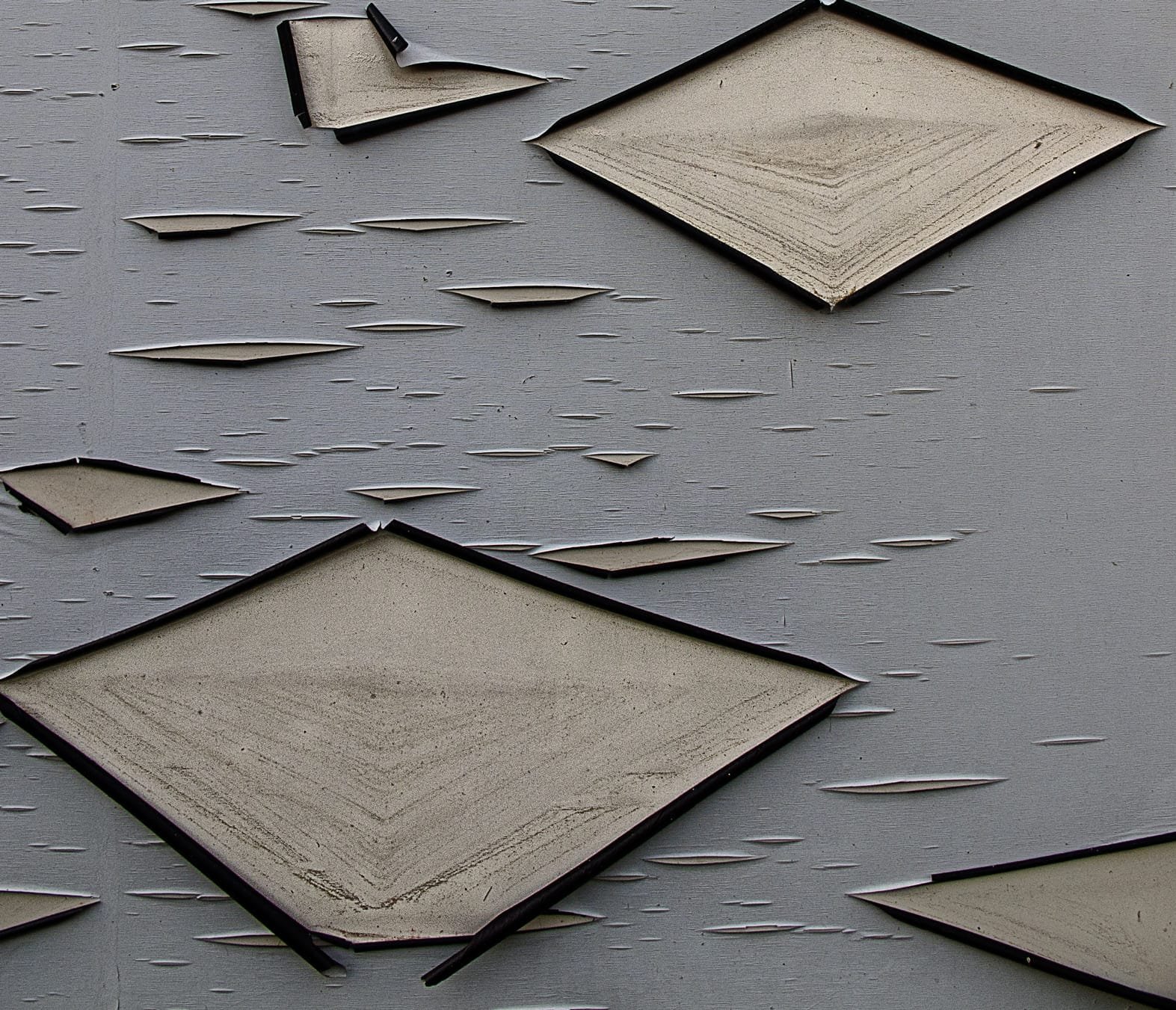
Pestarino Roberto approaches photography as a space between observation and interpretation, where ordinary realities can become unfamiliar through the camera. His photographic practice is rooted in an ongoing exploration of the relationship between reality, emotion, and imagination. Rather than simply recording what appears before the lens, he searches for overlooked details, subtle structures, and visual encounters capable of producing an emotional response. A weathered surface, an architectural fragment, an urban passage, or an apparently insignificant object can become the starting point for a more contemplative image.
His work moves freely across Fine Art Photography, street photography, urban environments, nature, architecture, and still life. This breadth reflects a curiosity that does not depend on a single subject or established visual formula. Instead, Roberto’s practice is guided by the act of looking itself: examining the world carefully and finding new possibilities within familiar surroundings.
Photography as a Form of Visual Exploration
For Roberto, photography provides a means of slowing down perception. Everyday environments are filled with forms and relationships that can easily disappear beneath the speed of daily life. Through the camera, he isolates these fragments and gives them renewed significance.
Shapes, geometry, textures, and the visible effects of time occupy an important place within his photographic language. These elements can be encountered almost anywhere, from an aging architectural surface to the arrangement of objects in a quiet interior. What matters is not necessarily the conventional beauty of the subject, but its capacity to reveal something when observed closely.
This approach allows Roberto to move between documentation and abstraction. A recognizable object may remain identifiable while simultaneously becoming a composition of lines, planes, textures, and tonal relationships. Photography therefore becomes more than a record of external reality. It becomes a process through which reality can be reorganized and reconsidered.
Between Reality and Personal Interpretation
A defining characteristic of Roberto’s practice is his interest in the space between what is seen and what is imagined. His photographs begin with something real, yet the final image may invite the viewer to perceive it differently.
This tension is particularly relevant to his Fine Art Photography, where visual information can be reduced, isolated, or transformed until the subject acquires an almost abstract character. A wall can become a study of texture. A building can become an arrangement of geometric structures. A fragment of nature can suggest an entirely different landscape.
Such images encourage the viewer to look beyond immediate recognition. Instead of asking only what something is, the photograph invites questions about how it feels, how it has changed, and what associations it might generate.
The Fall of Geometry
In The Fall of Geometry, Roberto turns a weathered door into an abstract study of deterioration, structure, and time. At first glance, the subject is an ordinary architectural element. Yet close observation reveals a complex surface in which peeling and detached paint forms irregular shapes, fragments, edges, and lines.
The original order suggested by the door has gradually been disrupted. Layers that once contributed to a coherent surface have separated, cracked, and fallen away. What remains is a shifting arrangement of forms in which geometry appears to be losing its stability.
The title, The Fall of Geometry, gives this transformation an additional conceptual dimension. Geometry traditionally suggests order, proportion, repetition, and structure. Here, those qualities are gradually destabilized by decay. Straightforward divisions become fragmented. Defined boundaries become uncertain. The surface seems caught between construction and dissolution.
The photograph consequently moves beyond a straightforward depiction of an aging door. It becomes an observation of transformation itself.
Where Matter and Time Meet
Texture is central to the visual force of The Fall of Geometry. The deteriorated paint records the passage of time directly on the surface. Rather than treating aging as an imperfection to be concealed, Roberto places it at the center of the image.
Every crack, detached fragment, and irregular edge contributes to the photograph’s visual vocabulary. The surface becomes almost geological, resembling a terrain composed of shifting planes and suspended fragments. What was once functional has become visually expressive.
This attention to material change reflects Roberto’s wider interest in transformations created by time. His camera finds significance in surfaces that carry evidence of use, exposure, alteration, and decay. Time is not represented as an abstract idea but through physical traces embedded within the subjects he photographs.
In this sense, The Fall of Geometry demonstrates how photography can make impermanence visible. The door does not simply show what it is; it shows what it has become.
The Possibility of Abstraction
Roberto’s interest in geometry and texture naturally leads his photography toward abstraction. Yet his approach does not require the complete disappearance of the original subject. Instead, abstraction emerges through attention.
By isolating a fragment of reality, he encourages the viewer to reconsider its visual identity. Familiar objects can lose their immediate function and become compositions in their own right. Lines become directional elements. Surfaces become fields of texture. Shapes begin to interact independently of the object from which they originated.
This process gives his photographs a dual character. They remain grounded in the physical world while opening a space for imagination. The viewer can recognize the photographed environment while simultaneously experiencing it as something less literal.
Colour, Black and White, and Visual Language
Roberto works in both colour and black and white, allowing the treatment of an image to respond to its particular subject and atmosphere. Rather than treating either approach as a fixed signature, he searches for the balance that best expresses his interpretation.
Colour can emphasize relationships between surfaces, materials, and tonal variations, while monochrome can bring greater attention to structure, contrast, texture, and form. In both cases, the intention remains connected to his broader practice: to discover what lies beneath immediate appearances.
His photographic language is therefore flexible. It can accommodate the energy of a street scene, the structural clarity of architecture, the quiet arrangement of still life, or the organic complexity of nature. Across these different subjects, the underlying impulse remains one of curiosity.
Looking Again at the Familiar
One of the most compelling aspects of Roberto’s practice is its ability to locate visual possibilities within ordinary surroundings. His photography suggests that discovery does not always require extraordinary places. Sometimes it begins with looking longer at something that others might pass without noticing.
A deteriorating door can become an abstract composition. A fragment of architecture can become an investigation into geometry. An everyday object can acquire an unexpected emotional presence. These transformations occur because the camera changes the conditions of attention.
Roberto’s work ultimately proposes photography as a form of visual inquiry. His images are not simply answers to what he sees, but invitations to look again. Through an attentive engagement with shape, texture, material, and time, he creates photographs that occupy the space between documentation and imagination.
In The Fall of Geometry, this philosophy becomes particularly tangible. The weathered door stands as both subject and metaphor, its deteriorating surface revealing how order can gradually dissolve into something more ambiguous and expressive. Geometry does not simply disappear; it fragments, shifts, and takes on another identity.
For Pestarino Roberto, this transformation is where photography becomes most intriguing: in the moment when the familiar begins to look unfamiliar, and an overlooked fragment of reality opens into a new way of seeing.

