


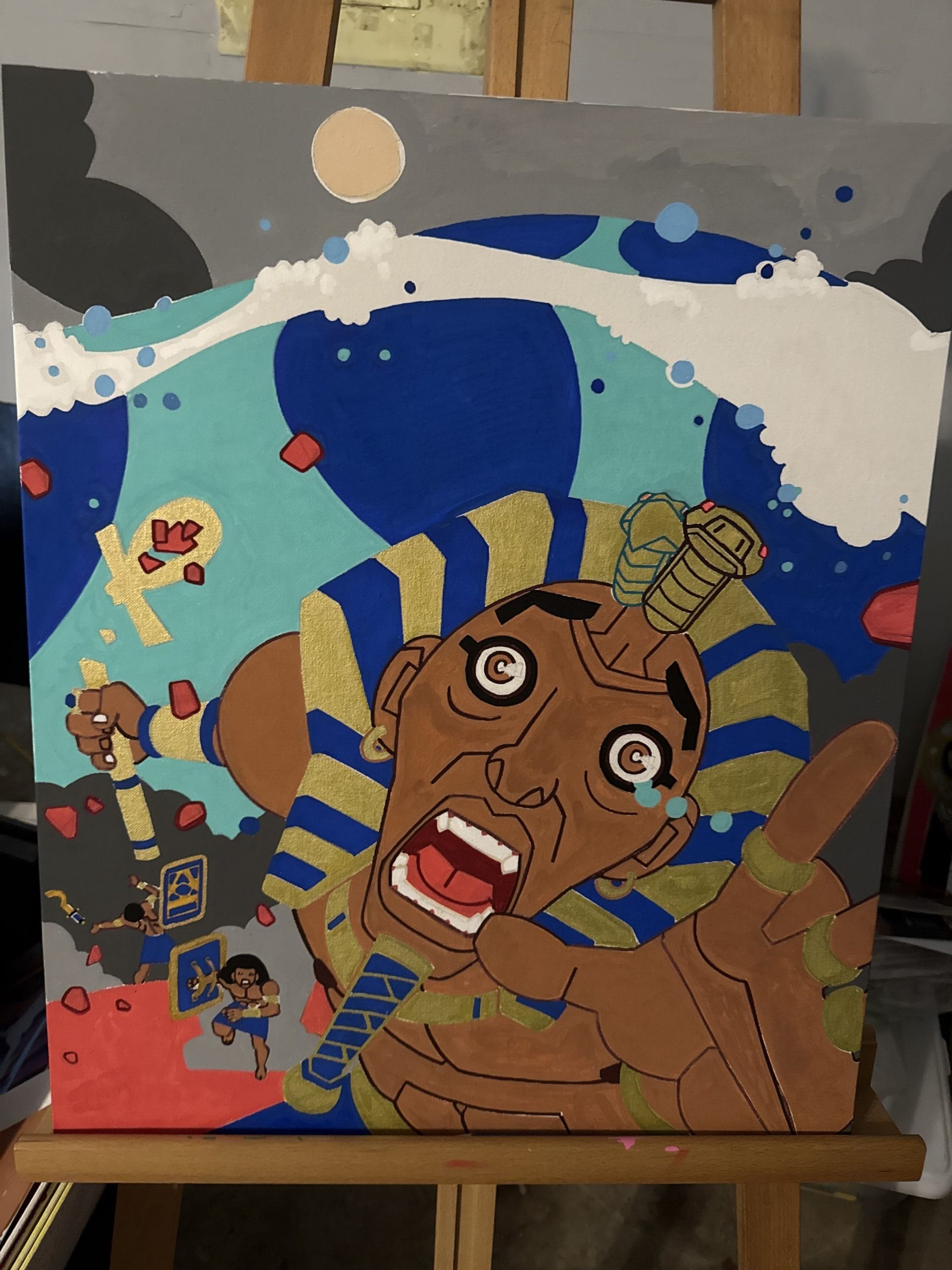
Ben Robertson III, who works under the artistic moniker okoyabey, is an artist whose work merges the visual language of comic books, fine art, and contemporary culture into a distinct minimalist style. Originally from New Orleans, Robertson relocated to the Atlanta metro area in the aftermath of Hurricane Katrina. The move marked a significant turning point in his life and creative journey, giving him a new environment in which to refine his artistic voice.
Primarily self-taught, Robertson has developed a practice centered on drawing and painting. His work demonstrates a strong understanding of graphic composition, bold silhouettes, and controlled color relationships. Rather than pursuing complexity for its own sake, he strips imagery down to essential forms, allowing shape, color, and symbolism to communicate directly with the viewer.
A Self-Taught Creative Journey
Many artists spend years in formal training before discovering their personal style. Robertson’s path has been different. By teaching himself and continually studying the work of artists, illustrators, and thinkers from a wide range of disciplines, he has cultivated an approach that feels both informed and independent.
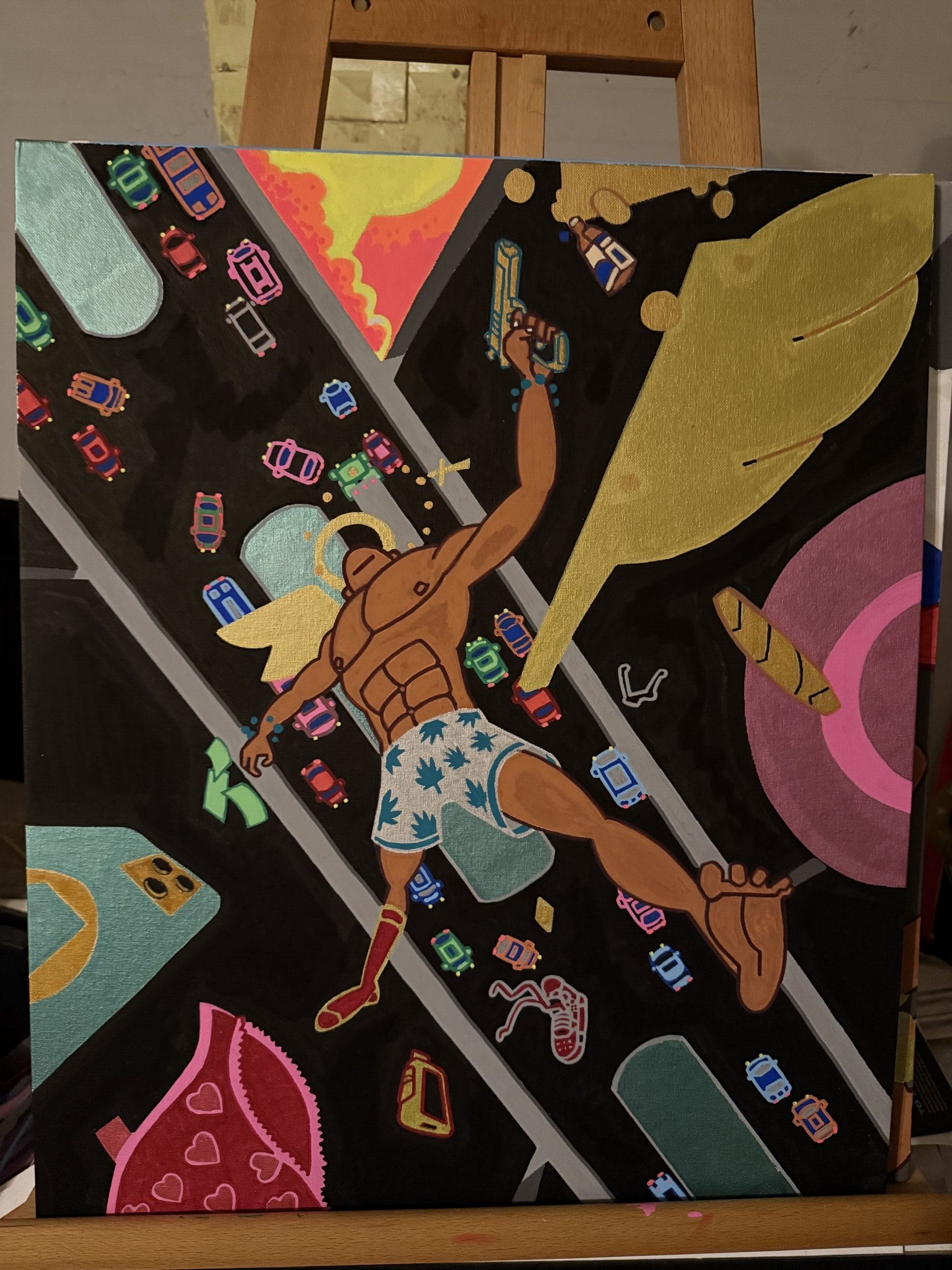
His artistic education extends beyond traditional art books. He keeps volumes on subjects ranging from hard sciences to esoteric studies close at hand, allowing ideas from many fields to enter his creative process. This broad intellectual curiosity gives his work a layered quality. Even when a painting appears simple at first glance, it often contains references and symbolic elements that invite deeper reflection.
The Influence of Comics and Cartoons
One of the most recognizable aspects of Robertson’s work is its connection to comic-book and cartoon aesthetics. He cites influential creators such as Mike Mignola, Jack Kirby, and Alex Toth as important inspirations. These artists are known for their mastery of shape, storytelling, and graphic clarity qualities that can also be seen throughout Robertson’s paintings and drawings.
From Mignola comes an appreciation for dramatic contrast and simplified forms. From Kirby comes a sense of energy and imagination. From Toth comes the discipline of reducing an image to only what is necessary. Rather than imitating these influences directly, Robertson absorbs their lessons and applies them to his own visual language.
Cartoons also play a significant role in his aesthetic. Their exaggerated shapes, iconic characters, and immediate readability align naturally with his minimalist approach. The result is artwork that feels accessible while still carrying conceptual depth.
Dialogues with Art History
Although pop culture is a major influence, Robertson’s interests extend far beyond contemporary media. He also looks to historical masters such as Gustav Klimt, Leonardo da Vinci, and Jean-Michel Basquiat.
These references may seem surprising alongside comic-book influences, but they reveal the breadth of his artistic curiosity. Klimt’s decorative richness, Da Vinci’s intellectual rigor, and Basquiat’s expressive symbolism all contribute different lessons. Robertson combines these influences with contemporary graphic sensibilities, creating works that bridge past and present.
He describes his process as a juxtaposition of the historical with the imaginative. This combination allows him to create images that feel familiar yet unexpected. A viewer may recognize echoes of classical art while simultaneously encountering the energy of modern pop culture.
Minimalism with Emotional Intent
Robertson approaches art from what he describes as a graphic, pared-down minimalist perspective. Minimalism in his work is not about emptiness; it is about focus. By reducing visual noise, he directs attention toward color, shape, and emotional resonance.
His compositions often rely on strong silhouettes, simplified figures, and carefully selected palettes. The restraint creates room for the viewer’s imagination. Rather than explaining everything, the image leaves space for interpretation.
This approach reflects one of his primary goals as an artist: to arouse emotion and trigger thought. Whether through an unexpected color combination or a symbolic element embedded within the composition, he aims to create a moment of engagement that lingers after the viewer has looked away.
The Role of Color and Shape
Color is not merely decorative in Robertson’s work. It functions as a language of its own. He is particularly interested in how different colors interact and how those interactions affect mood and perception.
Likewise, shape becomes a powerful storytelling tool. Simplified forms can communicate character, tension, or movement without relying on excessive detail. This sensitivity to visual design gives his paintings a strong graphic presence that translates effectively across both large and small formats.
The balance between bold color and simplified form creates images that are immediately striking while still rewarding closer examination.
Symbolism and an Expanding Oeuvre
As Robertson’s body of work continues to grow, he has made a conscious effort to incorporate symbolism into his pieces. This development adds another layer to his practice. Symbols allow him to communicate ideas that may not be obvious at first glance, encouraging viewers to spend more time with the work and discover new meanings.
His interest in subjects ranging from science to spirituality naturally feeds this symbolic vocabulary. References can emerge from mythology, philosophy, cultural history, or personal reflection. The symbols are not always presented as puzzles to be solved; rather, they function as visual cues that enrich the emotional and intellectual experience of the artwork.
A Distinctive Contemporary Voice
What makes okoyabey’s work distinctive is the way it unites seemingly different worlds. Comic books and Renaissance art, cartoons and symbolism, minimalism and emotional expression all coexist within a single visual language. The work feels contemporary without abandoning historical awareness, and graphic without sacrificing depth.
His journey from New Orleans to the Atlanta area, combined with years of self-directed study and experimentation, has resulted in a practice that is both personal and recognizable. Each piece reflects a curiosity about culture, history, imagination, and the ways images can communicate across boundaries.
Looking Forward
As Robertson continues expanding his oeuvre, his commitment to exploration remains central. The books surrounding him, the artists he studies, and the symbols he introduces into new works all point toward an ongoing evolution rather than a fixed destination.
Through the moniker okoyabey, Ben Robertson III has created a body of work that invites viewers to look beyond surface appearances. His paintings and drawings demonstrate that minimalism can carry complexity, that pop culture can coexist with art history, and that bold shapes and colors can become vehicles for memory, emotion, and thought.
In an art world often divided between the traditional and the contemporary, Robertson’s work offers a compelling reminder that the most interesting conversations frequently happen where those categories overlap.

