


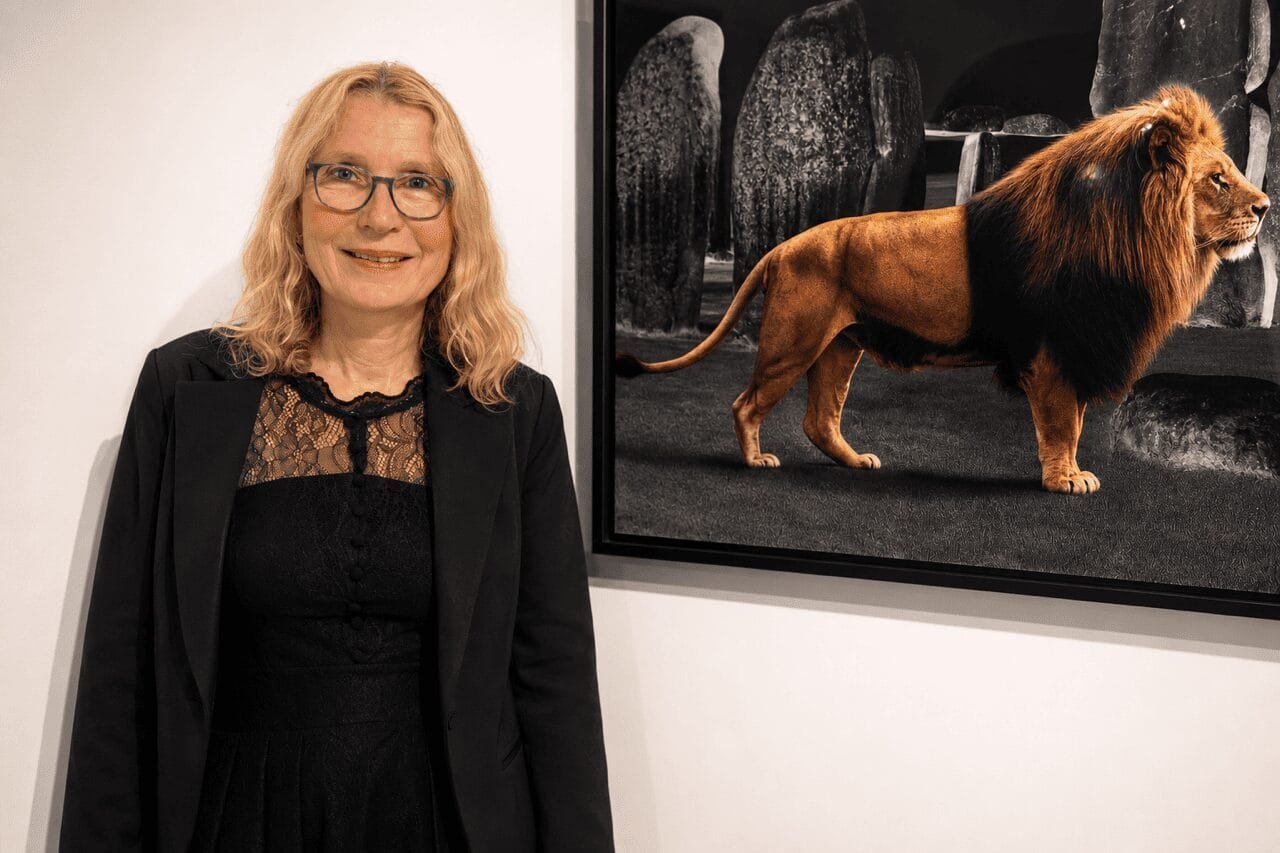
German contemporary artist Pilbri® works across painting, photography, and digital transformation, creating a practice that exists between the physical and the digital, the visible and the invisible. Since beginning her journey as a hybrid artist in 2004, she has developed a distinctive visual language centered on perception, connection, memory, emotion, and the subtle structures that influence human experience.
Rather than treating art as a representation of what can simply be seen, Pilbri® is interested in what exists beneath the surface. Her works invite viewers to consider the invisible processes that shape how people perceive themselves, understand others, and experience the world. Through the combination of traditional and digitally transformed imagery, she creates spaces where inner realities and external environments appear to overlap.
Her artistic practice is ultimately an exploration of connection. Whether examining the relationship between mind and body, individual and collective experience, or human beings and the world around them, Pilbri® seeks to transform intangible experiences into visual forms that viewers can encounter and contemplate.
A Hybrid Approach to Contemporary Art
Pilbri®’s artistic development has been shaped by her work across several mediums. Painting provides a foundation rooted in physical gesture, texture, and visual composition, while photography allows her to capture fragments of reality. Digital transformation then opens another dimension, enabling these elements to be altered, layered, and reimagined.
This hybrid approach reflects the complexity of contemporary experience itself. Human perception is rarely limited to one fixed reality. Memories can alter the way a person sees the present, emotions can influence perception, and relationships can transform how individuals understand themselves.
Pilbri® brings these overlapping experiences into her imagery. Instead of separating physical and digital realities, she allows them to interact. The resulting works can feel simultaneously familiar and otherworldly, giving viewers a visual entry point into subjects that are difficult to describe through conventional imagery.
Making the Invisible Visible
A central idea throughout Pilbri®’s practice is the desire to make invisible processes perceptible. Thoughts, emotions, memories, communication, and empathy cannot be directly observed in the same way as a physical object, yet they profoundly influence human life.
Her art gives these intangible experiences a visual presence.
This interest is particularly evident in her current project, Walking Brain, which examines the human mind as something that is constantly influenced by its surroundings. Instead of presenting consciousness as an isolated internal system, the project considers how relationships, memories, emotions, and resonance continuously shape the individual.
The concept expands the idea of the brain beyond anatomy. For Pilbri®, the mind is not simply contained within the boundaries of the body. It exists in relation to other people and to the wider world, constantly responding, connecting, and changing.
Walking Brain: Exploring Consciousness Through Connection
Walking Brain represents an important stage in Pilbri®’s ongoing investigation of human consciousness. At its center is the idea that the mind is relational. Human beings develop through encounters with others, and experiences leave traces that continue to influence perception and behavior.
Within this framework, memory becomes more than a record of the past. Emotion becomes more than a temporary feeling. Communication becomes more than an exchange of words. Together, these elements create an invisible network through which people experience reality.
Pilbri® translates this network into visual form by combining human imagery with abstract, luminous, and digitally transformed elements. Her works encourage viewers to think about consciousness not as something static, but as a dynamic process shaped by continuous interaction.
Resonant Minds: Two Consciousnesses, One Shared Field
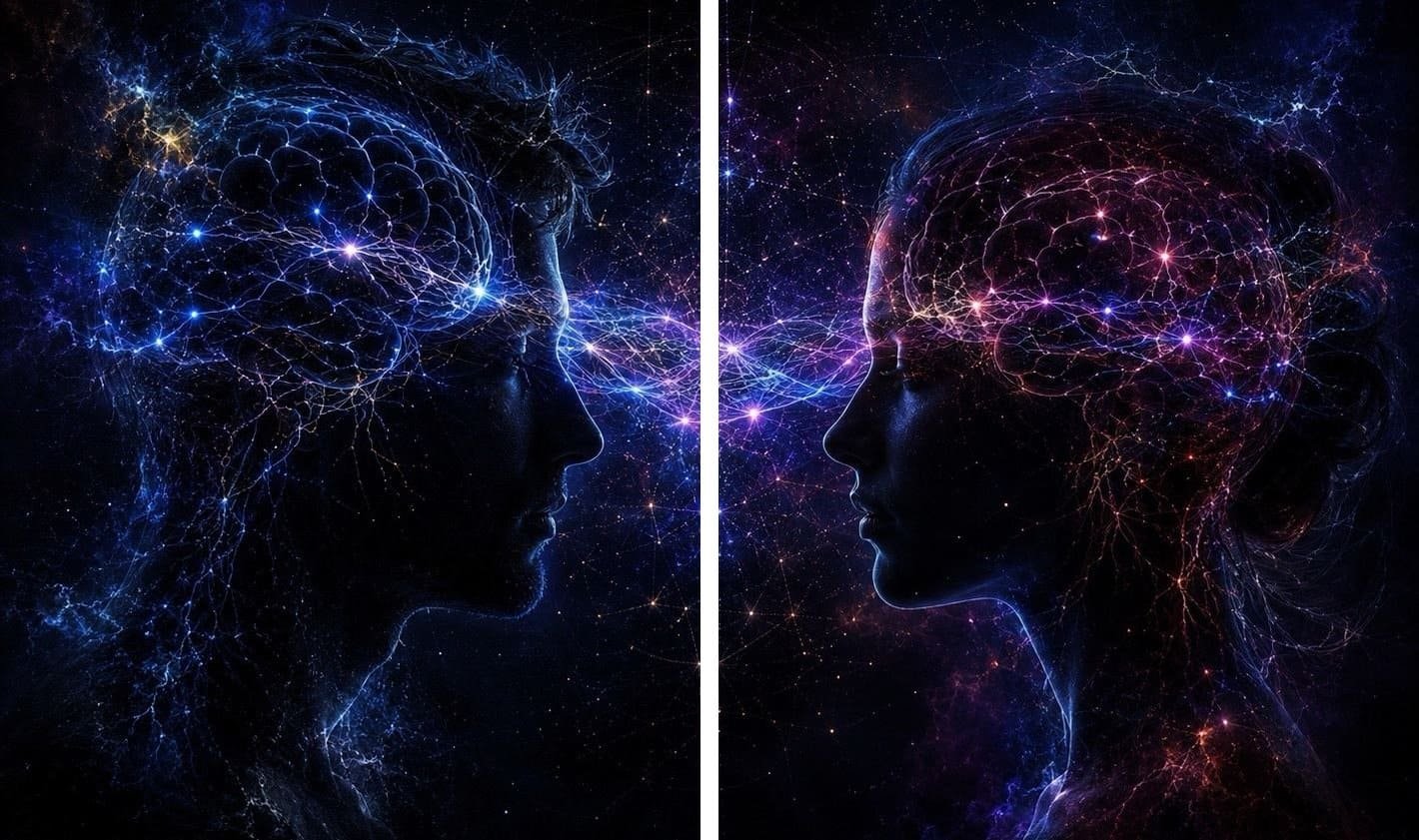
One of the works connected to the Walking Brain project is Resonant Minds, an evocative exploration of the invisible connection between two human beings.
The artwork presents two profiles facing one another within a cosmic space. Their neural structures extend beyond the boundaries of their individual minds, moving outward into a shared field of light and energy. The composition creates the impression that the two figures are separate individuals while simultaneously participating in something larger than themselves.
The imagery immediately evokes the complexity of the human brain, but Resonant Minds reaches beyond a scientific interpretation. The neural structures become a visual metaphor for communication, empathy, perception, and emotional exchange.
The space between the two figures is particularly significant. Rather than functioning simply as an empty gap, it becomes a place of connection. Light and energy appear to move beyond individual boundaries, suggesting that human relationships can create a shared psychological and emotional space.
The Resonance Between People
The title Resonant Minds points toward one of the work’s central ideas: resonance. In human relationships, people often influence one another in ways that cannot be easily measured or explained. A conversation can change someone’s perspective. A memory can be triggered by another person. An emotional response can emerge through empathy and shared experience.
Pilbri® transforms this intangible phenomenon into an image.
The two profiles in Resonant Minds can be understood as individual consciousnesses, but their neural structures suggest that individuality does not mean complete isolation. Every person carries experiences, emotions, and memories that affect how they relate to others. At the same time, encounters with other people can reshape those internal worlds.
Through the cosmic setting and luminous visual elements, the artwork expands this interpersonal relationship into something almost universal. The connection between two minds becomes a metaphor for the broader human desire to understand, communicate, and be understood.
Between Science, Emotion, and Imagination
Pilbri®’s work occupies an intriguing space between recognizable imagery and abstraction. Elements associated with neuroscience and human anatomy provide a point of reference, while the transformation of these elements into luminous and cosmic environments moves the work toward imagination.
This balance allows her art to engage with contemporary questions without becoming purely literal. The viewer can recognize the human profile and neural structures while also interpreting them symbolically.
In Resonant Minds, the brain becomes more than an organ. It becomes a representation of consciousness itself, while the surrounding light suggests the emotional and relational dimensions that cannot be contained within anatomy alone.
This combination of scientific imagery and poetic interpretation reflects Pilbri®’s broader artistic approach: using visible forms to suggest realities that are otherwise difficult to see.
An Invitation to Reflect
Pilbri® does not appear to offer simple answers about consciousness or human relationships. Instead, her works create visual environments in which viewers can pause and consider their own experiences.
Resonant Minds may prompt questions about how deeply people influence one another. What happens when two people truly connect? Can emotions and memories create a shared field between individuals? How much of what we understand about ourselves is shaped through our relationships with others?
These questions give the work a personal dimension. Although its imagery is rooted in the human brain and contemporary digital transformation, its underlying subject is something universally familiar: the need for connection.
Creating Images of the Unseen
Since 2004, Pilbri® has continued to develop a hybrid artistic practice that moves freely between mediums and ideas. Her work demonstrates how painting, photography, and digital transformation can be combined to explore contemporary questions about perception and existence.
Through Walking Brain and works such as Resonant Minds, she approaches the mind as a living, evolving space one that is shaped not only by individual thought but also by memory, emotion, communication, and relationships.
Her art ultimately asks viewers to look beyond what is immediately visible. Beneath every interaction, expression, and experience are invisible processes that shape the way human beings connect with themselves and with others.
In Resonant Minds, those invisible connections become luminous. Two minds remain distinct, yet their inner structures reach toward a shared space, suggesting that consciousness may be deeply individual while still being profoundly relational. It is this meeting point between the personal and the collective, the physical and the digital, and the visible and the unseen that gives Pilbri®’s work its distinctive contemporary character.
To explore more of her work and ongoing projects, visit https://www.pilbri-artandmore.eu/.

