


Brian Fogarty started painting 24 years ago at the age of sixty, beginning an artistic journey that would later define a deeply meaningful chapter of his life. Entirely self-taught, he entered the world of painting not through formal academic training but through instinct, emotion, and personal expression. What makes his story especially compelling is the fact that he embraced art later in life, proving that creativity and artistic purpose are not limited by age or traditional pathways.
Over the years, Fogarty has developed a body of work rooted in sincerity and emotional depth. His paintings are not driven by artistic trends or commercial expectations but by observation, memory, and human connection. This independence from formal structures has allowed his work to remain honest and deeply personal. Every canvas feels intimate, as though the viewer is witnessing a moment preserved directly from the artist’s own experience.
His dedication to painting eventually brought wider recognition. In the summer of 2013, he held a major solo exhibition titled Soul in Search of a Canvas at 28 Cork Street in London, one of the city’s most respected art locations. The title itself perfectly reflected the emotional nature of his work. Fogarty’s paintings are not simply visual compositions; they are expressions of memory, feeling, and reflection searching for permanence through art.
The Power of Personal Narrative in Art
What distinguishes Brian Fogarty’s work is his ability to transform ordinary moments into emotionally resonant visual narratives. Rather than relying on spectacle or dramatic subject matter, his paintings often emerge from deeply personal experiences that many people can quietly relate to. This sensitivity to human emotion gives his work its lasting impact.
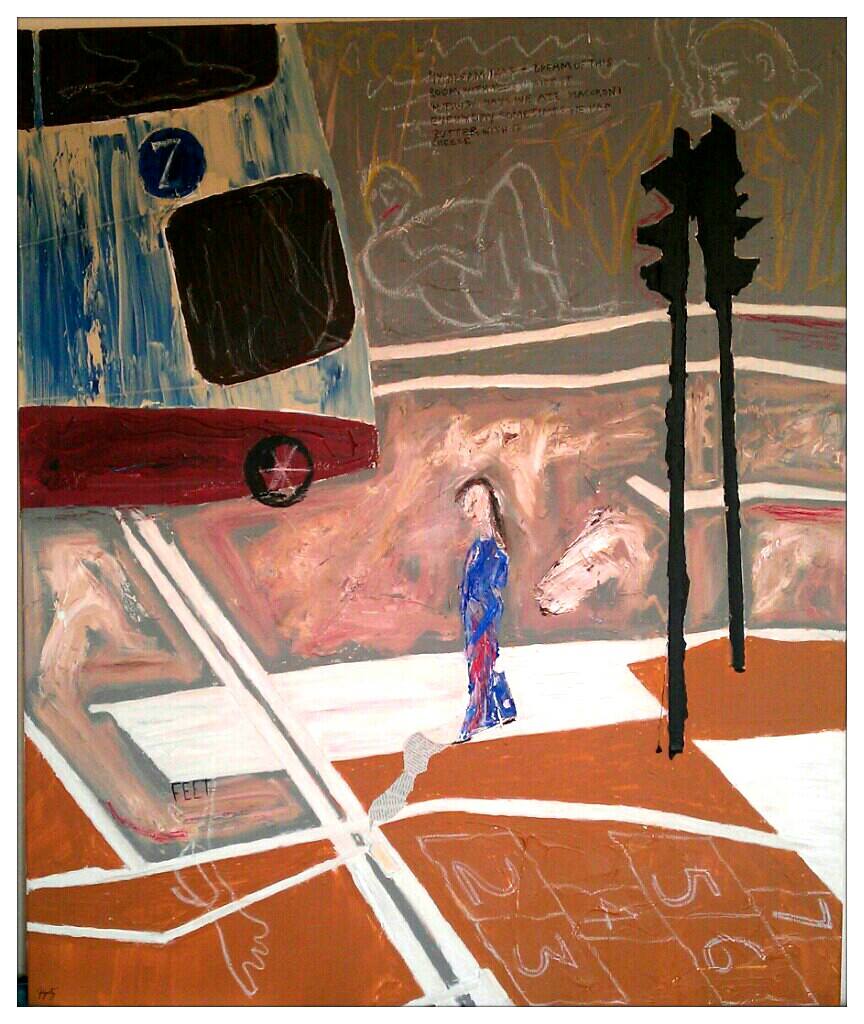
One particular painting stands out as especially poignant. The inspiration came from a simple moment witnessed from his studio window. Fogarty watched his girlfriend, Jean, crossing the street to catch a bus home after visiting him. At first glance, it was an everyday scene, the kind of moment most people might forget within minutes. Yet for the artist, it carried a quiet emotional significance that compelled him to paint it.
Years later, that moment has taken on heartbreaking meaning. Jean is now terminally ill and living in a nursing home, unlikely to live much longer. What was once a simple observation has become an emotional memory preserved forever through paint. The artwork now stands as a visual reminder of love, companionship, and the fragility of time.
This emotional transformation is central to Fogarty’s artistic practice. His paintings do more than document scenes; they preserve feelings. They become personal archives of moments that life itself cannot hold onto indefinitely.
Painting as an Act of Remembrance
Throughout history, artists have attempted to preserve fleeting moments against the passage of time. Brian Fogarty’s work continues this tradition in an especially personal and heartfelt way. His paintings demonstrate how art can become an act of remembrance, allowing moments of connection and affection to survive long after circumstances change.
The painting inspired by Jean carries extraordinary emotional weight because it exists between past and present. When the scene originally unfolded, neither the artist nor Jean could have known how precious that ordinary goodbye would later become. The painting now holds not only the image of a woman crossing a street but also the memory of a shared life and the awareness of mortality.
There is something universally relatable within this experience. Many people carry memories of seemingly ordinary moments that later became deeply important: the final conversation with a loved one, a wave goodbye from a doorway, or a quiet afternoon that unknowingly marked the end of a chapter in life. Fogarty’s work captures this emotional reality with remarkable honesty.
Rather than overwhelming the viewer with dramatic emotion, he allows feeling to emerge naturally through context and simplicity. This restraint gives the work even greater power. The emotional depth is discovered gradually, making the experience more authentic and deeply human.
The Strength of the Self-Taught Artist
Brian Fogarty’s journey also highlights the unique strength often found in self-taught artists. Without the influence of rigid academic expectations, self-taught painters frequently develop a more instinctive and personal visual language. Their work often grows directly from lived experience rather than technical convention.
Fogarty’s paintings possess this sense of emotional immediacy. There is a feeling that each work exists because it needed to be created. His art is not about performance or intellectual distance; it is about emotional communication.
Beginning to paint at sixty may have also given him a distinctive perspective. By the time he started painting, he had already experienced decades of life, relationships, memories, and emotional complexity. These experiences became the foundation of his creative voice.
Many artists spend years searching for meaningful subject matter, but Fogarty’s life itself became his inspiration. His work reflects observation shaped by maturity and genuine experience, giving it emotional credibility that resonates strongly with viewers.
“Soul in Search of a Canvas”
The title of Fogarty’s 2013 solo exhibition, Soul in Search of a Canvas, feels especially significant when viewed alongside the deeply personal themes within his paintings. It suggests an artist searching for a way to transform invisible emotions into something tangible and lasting.
A soul searching for a canvas implies urgency and necessity, the desire to preserve thoughts and feelings before they disappear. This idea connects perfectly with the painting inspired by Jean. The canvas becomes more than a surface for paint; it becomes a place where memory resists time.
The exhibition title also reflects Fogarty’s personal path as an artist. Starting later in life may have intensified the emotional purpose behind his work. Rather than pursuing art as ambition alone, he appears to paint from a genuine need to express, remember, and connect.
This authenticity is one of the defining qualities of his work. Viewers often recognize when art comes from real emotional experience, and Fogarty’s paintings carry that unmistakable sincerity.
Art That Speaks Through Humanity
In a contemporary art world often dominated by spectacle and complexity, Brian Fogarty’s paintings remind viewers of the enduring power of honesty and emotional truth. His work does not seek attention through shock or extravagance. Instead, it quietly invites reflection.
The story behind the painting inspired by Jean demonstrates how deeply personal experiences can become universally meaningful when translated honestly through art. What began as one man watching someone he loved walk across a street has evolved into a meditation on love, memory, loss, and the passage of time.
Fogarty’s art succeeds because it remains profoundly human. It acknowledges affection without sentimentality and grief without theatricality. His paintings allow viewers to recognize pieces of their own lives and memories within his experiences.
Brian Fogarty’s artistic journey proves that creative purpose has no age limit. Beginning at sixty, he discovered not only a passion for painting but also a powerful language through which memory and emotion could continue to live. Through his work, fleeting moments gain permanence, and ordinary human experiences become timeless.

