


Marcia Burtt’s journey as an artist began with a gift that would quietly shape the course of her life. When she was eleven years old, she was given a complete oil painting setup, and from that moment, painting became part of her world. After school and on weekends, she spent her time learning through practice, observation, and delight in the act of making images. That early start was more than a childhood hobby. It planted the foundation for a lifelong relationship with painting, one that would continue to evolve through changing seasons of adulthood.
Like many artists, Burtt’s path was not perfectly uninterrupted. There were years when full-time work left little room for art, and painting had to wait while other responsibilities took priority. Yet the pause never signaled an ending. Instead, it reveals something important about her dedication: even when daily life created distance from the studio, the impulse to paint remained. Eventually, as she raised her three sons, Burtt returned to art with renewed seriousness and commitment, later earning an MA in art. This achievement marked not only an academic milestone but also a personal affirmation that painting was central to who she was.
Returning to Painting Through Daily Life
One of the most compelling aspects of Burtt’s story is the way painting was woven back into her life through ordinary family routines. When her youngest son was ready for preschool, she found herself with a small but precious window of time in the mornings. For many people, three hours might seem too brief to accomplish much. For Burtt, it became an opportunity for focused artistic freedom.
Those morning hours were spent with remarkable energy and purpose. She would drive to her favorite beach, carry and set up her painting gear, create a sizable landscape painting, clean her brushes, pack everything away, and return in time to pick up her son. The image of this routine says much about Burtt’s artistic character. Her practice was not built around waiting for ideal circumstances. It was built around determination, speed, responsiveness, and a deep need to engage directly with the landscape.
This rhythm of working quickly, outdoors, and under the pressure of time shaped the vitality of her painting style. It encouraged instinct over hesitation and direct perception over overthinking. In Burtt’s work, the landscape is not treated as a static subject to be copied. It is something living and changing, encountered in real time.
The Landscape as Experience
Marcia Burtt’s paintings emerge from a close relationship with nature, especially coastal environments. Her favorite beach is not simply a backdrop or a convenient motif. It is a place of repeated return, a site of intimacy and observation. Such familiarity allows an artist to go beyond surface description and instead respond to subtler shifts in atmosphere, season, light, and mood.
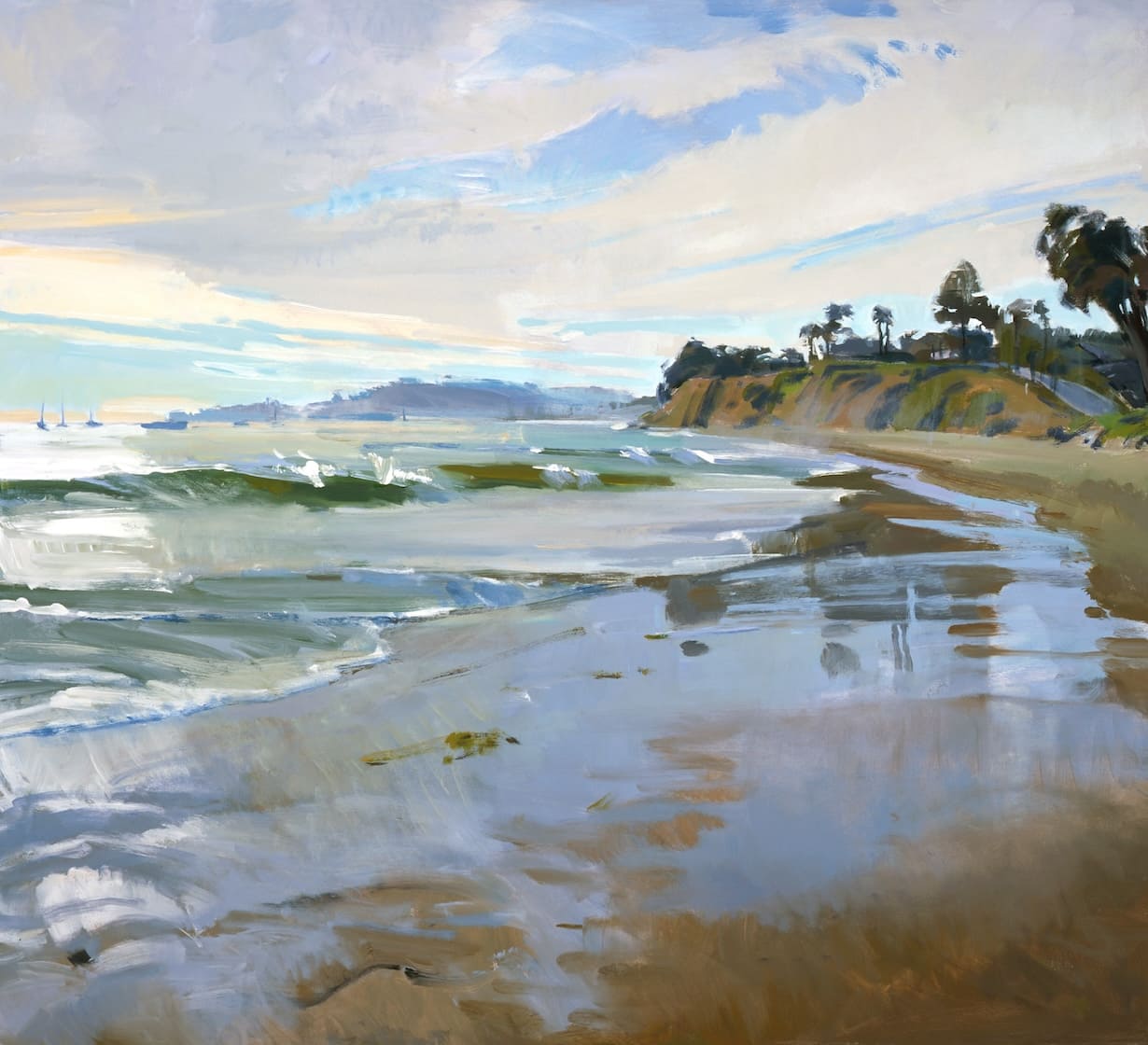
This sensitivity is especially clear in her artwork Silvery Light, an acrylic painting measuring 36 by 40 inches. The work reflects both the discipline and immediacy that define Burtt’s approach. Although the canvas is large, she covered it in a single afternoon, working with urgency and trust in her own perception. The painting process was intentionally direct. She let visual impressions race from her eyes to her hand and then to the brush on canvas, allowing minimal interference from self-criticism or conscious control.
That choice reveals an artist deeply interested in preserving the freshness of experience. Rather than constructing the image through cautious planning, Burtt gave herself permission to respond spontaneously. The result is not accidental. It is grounded in years of practice that made such freedom possible.
The Influence of Creative Process
Burtt’s thinking behind Silvery Light offers a fascinating connection between painting and writing. She was inspired by the way successful authors often work: first allowing words to flow freely, then returning later to revise and edit. Applied to painting, this approach became a way of bypassing hesitation and capturing an immediate visual truth before analysis could interrupt it.
On a January afternoon, she began the painting with no preparatory drawing. That decision is significant. Without an initial sketch, the work had to develop through movement, intuition, and direct engagement with the scene. It demanded confidence, but also openness to surprise. As the sun moved westward, the landscape before her changed. Sunshine began dancing over the water, introducing an element that had not even been present when she started.
This moment of transformation seems central to the spirit of Silvery Light. The painting was not merely about recording a fixed view. It was about witnessing the scene as it shifted, and responding to a fleeting display of light before it disappeared. Burtt became entranced by that changing brilliance, and the painting carries the energy of that encounter.
In less than three hours, the canvas was covered. Later, in the studio, she refined and revised it. This balance between spontaneity and revision is key. The first stage captured immediacy; the second allowed for reflection. Together, they created a work that feels both alive and resolved.
Silvery Light and the Language of Illumination
The title Silvery Light points directly to one of Burtt’s deepest concerns as a painter: the elusive beauty of light itself. Light in landscape painting is never just illumination. It shapes form, creates atmosphere, establishes mood, and gives emotional resonance to place. In Burtt’s hands, light is not passive. It moves, flickers, dances, and transforms what is seen.
The silvery quality suggested by the title evokes something delicate and shimmering rather than harsh or dramatic. It implies a nuanced atmosphere, perhaps one in which water, air, and sunlight merge into a luminous whole. Because the painting was made in response to a changing afternoon scene, it likely carries the sensation of motion as much as description. One can imagine a surface alive with shifting reflections, where the brushwork retains the urgency of the artist’s first perception.
What makes this especially compelling is the method by which Burtt achieved it. She did not over-prepare or over-control the image. Instead, she allowed the painting to remain close to sensation. That immediacy gives the work its authenticity. It feels less like a calculated composition and more like an event translated into paint.
A Practice Shaped by Commitment and Presence
Burtt’s artistic story is also a story of perseverance. Her career was not built in uninterrupted studio seclusion. It was shaped through the realities of working life, motherhood, education, and the challenge of finding time where time seemed scarce. Yet rather than diminishing her art, these experiences appear to have sharpened it.
There is something deeply admirable in the image of an artist racing against the clock each morning, squeezing a full act of creation into a narrow stretch of hours. That urgency taught Burtt to trust herself, to paint decisively, and to remain fully present before nature. Her work reminds us that artistic seriousness is not measured by ideal conditions but by consistency of vision and devotion to practice.
In Silvery Light, these qualities come together beautifully. The painting stands as an example of what happens when discipline and surrender meet: years of experience supporting a moment of pure responsiveness. It reflects an artist who understands that the most powerful images often begin not in control, but in attention.
Conclusion
Marcia Burtt’s art is grounded in lifelong devotion, shaped by personal experience, and animated by a profound sensitivity to the natural world. From the childhood excitement of receiving her first oil setup to the intense, time-bound mornings spent painting at the beach, her path reveals resilience, passion, and an unbroken connection to the act of seeing.
Silvery Light captures much of what makes her work compelling. It is a painting born from speed, observation, intuition, and later reflection. Most of all, it demonstrates Burtt’s ability to translate a fleeting encounter with sunlight and water into something lasting. In her hands, landscape becomes more than scenery. It becomes a record of presence, a testimony to the beauty of a passing moment, and a celebration of the artist’s enduring dialogue with light.

