


Luciano Caggianello is an Italian artist and designer whose creative path has been shaped by an uncommon ability to bridge art, science, design, and philosophy. Born in Siena, Italy, Caggianello developed his artistic identity through a multidisciplinary career that spans advertising, illustration, graphic design, industrial design, and automotive design. Rather than treating these disciplines as separate pursuits, he has consistently woven them together into a unified artistic vision, allowing each field to inform and enrich the others.
His early professional experiences provided a deep understanding of visual communication, composition, and the relationship between function and aesthetics. Whether working on commercial projects or exploring artistic concepts, Caggianello demonstrated an interest in how images influence perception and how ideas can be communicated beyond conventional visual language.
Alongside his professional career, he pursued an independent path of artistic research that gradually expanded into an extensive national and international exhibition journey. Through years of experimentation, he refined a distinctive visual and conceptual approach that moves beyond representation toward a more profound exploration of meaning, perception, and intellectual inquiry.
From Representation to Presentation
One of the defining characteristics of Luciano Caggianello’s work is his transition from traditional representation toward what can best be described as presentation. Rather than attempting to depict reality as it appears, he creates works that invite viewers to actively experience ideas, relationships, and philosophical questions.
His artistic language is built upon synthesis. Every project becomes the result of accumulated knowledge drawn from remarkably diverse fields of study, including Applied Industrial Physics, Architecture, visual communication, and design theory. These influences do not appear separately but instead merge into a cohesive artistic vocabulary where scientific reasoning coexists with poetic interpretation.
This interdisciplinary foundation allows Caggianello to approach art as an investigative process. His works rarely offer immediate answers. Instead, they create intellectual spaces where viewers are encouraged to question assumptions about reality, materiality, absence, value, and existence itself.
Rather than simply presenting an image to observe, Caggianello presents a conceptual experience to contemplate.
Experimenting Between Material Simplicity and Digital Thought
An essential aspect of Luciano Caggianello’s contemporary practice is his ongoing experimentation between what might be described as “concrete poverty” and digital art. This balance reflects both physical restraint and conceptual richness.
His choice of materials often emphasizes simplicity rather than extravagance. Manipulated paper, minimal structures, installations, and carefully considered physical interventions demonstrate that artistic significance does not depend upon luxurious materials. Instead, meaning emerges through relationships, transformation, and conceptual precision.
At the same time, his work embraces the intellectual possibilities offered by contemporary digital thinking. Digital influence is not merely technological but philosophical. It represents new ways of organizing information, interpreting perception, and constructing meaning within increasingly complex visual environments.
This dialogue between tactile material and conceptual abstraction produces works that are simultaneously grounded and speculative, inviting viewers to navigate both physical presence and intellectual possibility.
Philosophy as Artistic Practice
Philosophy occupies a central role in Caggianello’s creative process. Rather than serving as a source of inspiration alone, philosophical inquiry becomes an integral component of the artwork itself.
His practice investigates themes such as perception, existence, emptiness, identity, language, and value. These investigations often draw upon phenomenology, metaphysics, and conceptual thought while remaining visually accessible through carefully constructed forms.
Instead of illustrating philosophical concepts, Caggianello transforms them into experiential encounters. The viewer is not expected simply to understand the work intellectually but to experience uncertainty, reflection, and discovery throughout the act of observation.
This relationship between viewer and artwork transforms each exhibition into an active dialogue where interpretation remains open, dynamic, and continually evolving.
The Beginning and the End of Nothingness
One of Luciano Caggianello’s most compelling works is The Beginning and the End of Nothingness (2024), a manipulated paper piece measuring 50 x 70 centimeters. Although materially modest, the work engages with remarkably ambitious philosophical questions concerning form, matter, possibility, and the nature of emptiness.
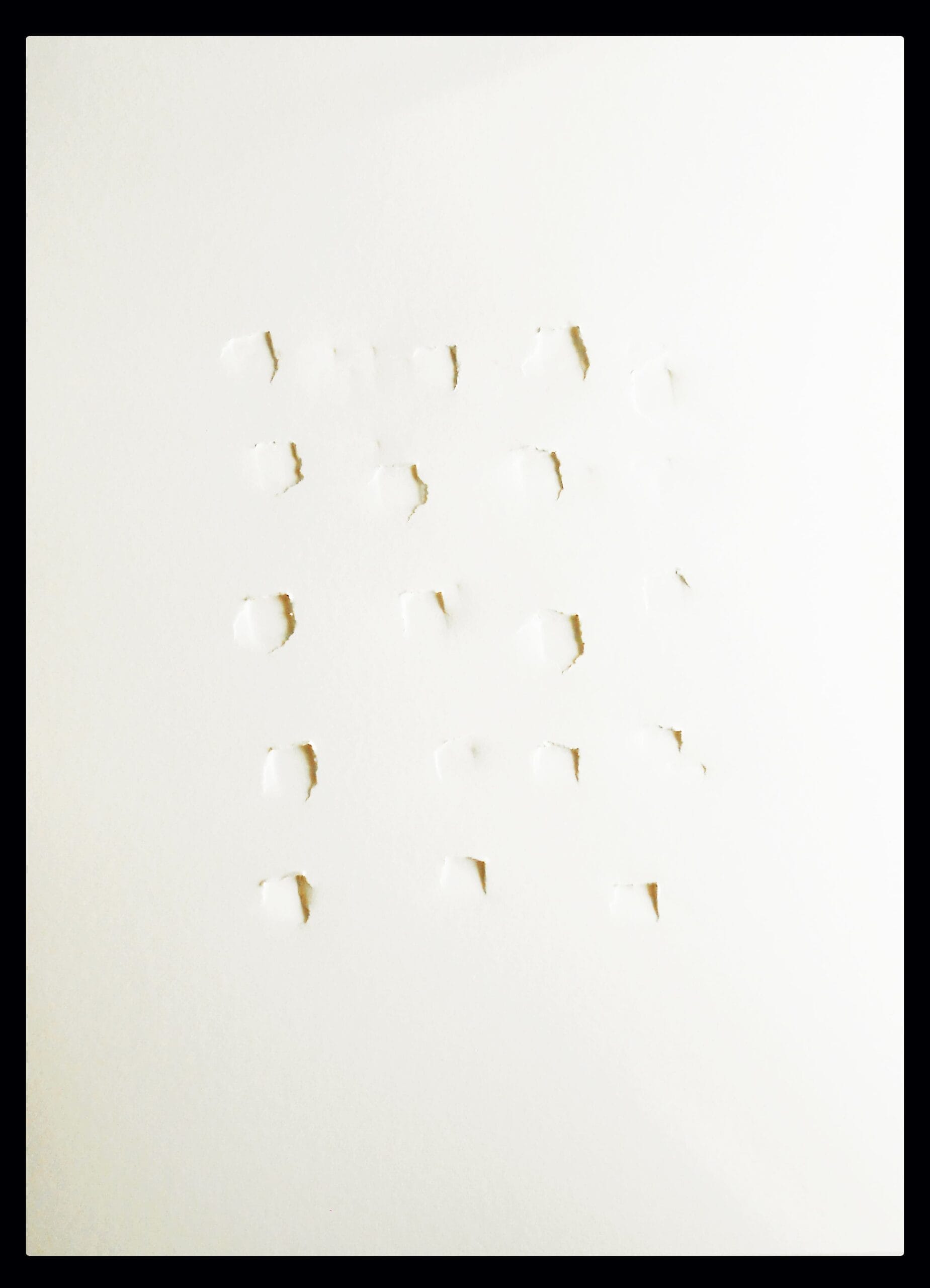
The work begins with the premise that intentions act within matter to generate form. These forms may exist as measurable, predictable structures or as dynamic, intensive realities that resist simple definition. Caggianello explores the distinction between extensive form associated with quantity, structure, and predictability and intensive form, which exists through transformation, potential, and experiential depth.
Perhaps the most fascinating aspect of the work lies in its treatment of nothingness. Rather than presenting emptiness as absence, Caggianello proposes that the void itself may possess an active, intensive character. Nothingness becomes a space of possibility rather than negation, inviting viewers to reconsider one of philosophy’s oldest questions through contemporary artistic language.
Manipulated paper serves as the ideal medium for this exploration. Its subtle folds, textures, and physical transformations mirror the conceptual shifts occurring within the work itself, demonstrating how even the simplest material can communicate profound intellectual complexity.
Questioning Value in The Consumerism of the Art
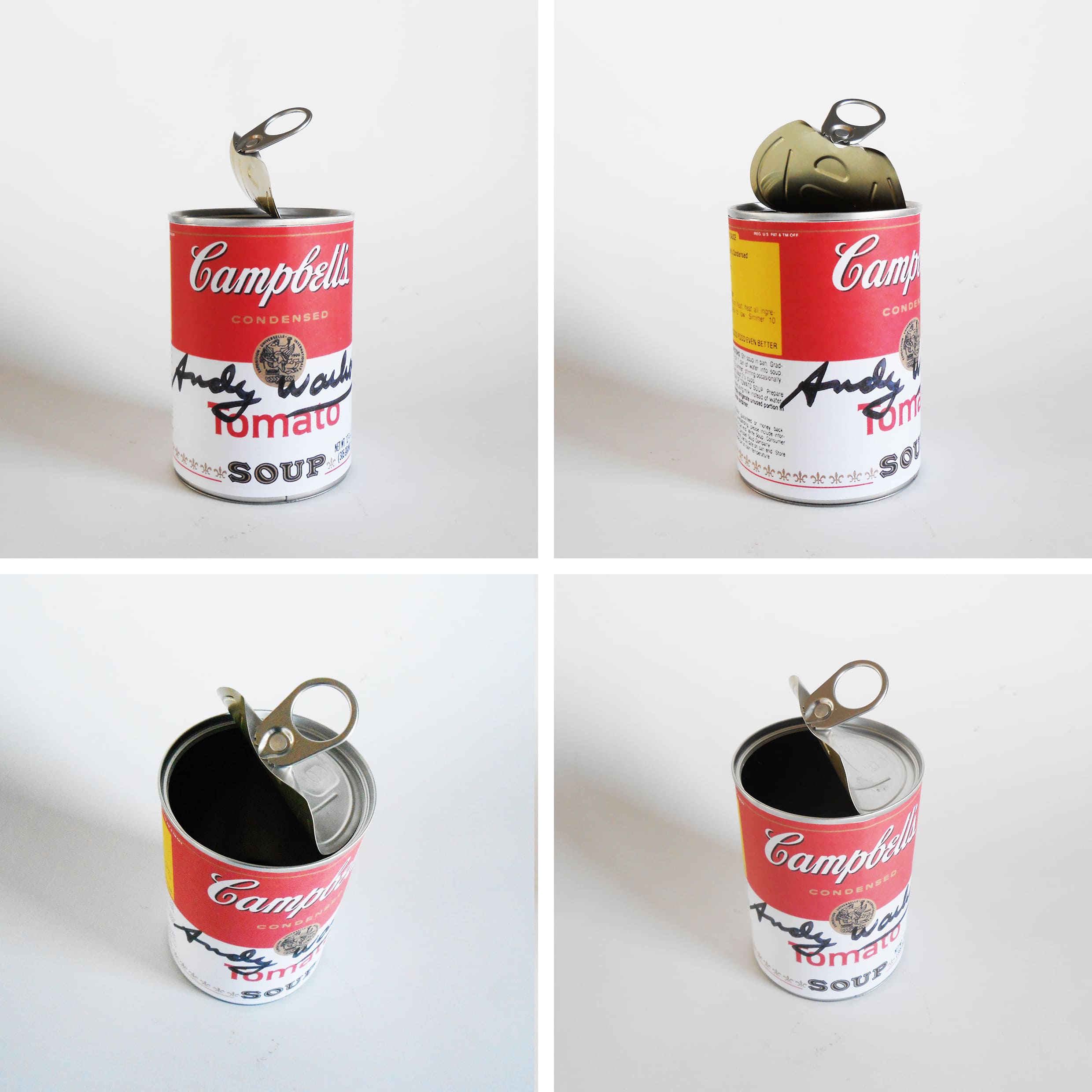
Created in 2026, The Consumerism of the Art is a compact installation measuring only 10 by 8.5 centimeters, yet it addresses one of the most pressing issues facing today’s cultural landscape: the commercialization of artistic value.
Caggianello challenges the growing tendency to evaluate artists primarily according to market performance rather than creative significance. In a world where auction prices, branding, speculation, and investment increasingly dominate conversations about art, the intrinsic value of artistic research often becomes secondary.
The installation examines how consumer culture transforms artistic creation into a commodity. Instead of appreciating the intellectual, emotional, or cultural contributions of an artist, attention frequently shifts toward financial appreciation and market desirability.
Caggianello describes this phenomenon almost as a form of cultural consumption driven by appetite rather than understanding. Art becomes something to acquire, display, and speculate upon rather than something to contemplate deeply.
The deliberately intimate scale of the installation reinforces its conceptual strength. By avoiding monumental dimensions, the work redirects attention away from spectacle and toward critical reflection, asking viewers to reconsider how they assign value within the contemporary art world.
An International Artistic Voice
Throughout his career, Luciano Caggianello has established a significant presence through exhibitions both in Italy and internationally. His evolving body of work demonstrates remarkable consistency while continually expanding its conceptual range.
Despite addressing highly intellectual subjects, his work remains accessible through elegant visual restraint and thoughtful material choices. Each project reflects careful research, rigorous planning, and an unwavering commitment to artistic experimentation.
His multidisciplinary background enables him to move fluidly between design methodology, scientific reasoning, philosophical inquiry, and artistic expression. This unique combination has allowed him to develop an artistic identity that is both contemporary and timeless, grounded in technical precision while remaining open to interpretation.
Continuing the Dialogue Between Art and Thought
Luciano Caggianello represents a generation of contemporary artists who understand art not merely as visual production but as a sophisticated form of critical thinking. His practice demonstrates that artistic creation can simultaneously engage philosophy, science, design, culture, and human perception without sacrificing aesthetic clarity.
Whether contemplating the paradoxes of nothingness or questioning the economic mechanisms surrounding artistic value, Caggianello consistently encourages viewers to slow down, reflect, and participate in deeper intellectual conversations.
His work reminds us that contemporary art possesses the power not only to represent the world but also to challenge the ways we understand it. Through conceptual precision, material experimentation, and philosophical depth, Luciano Caggianello continues to expand the possibilities of artistic practice while inviting audiences to explore the rich territory where perception meets thought.

