


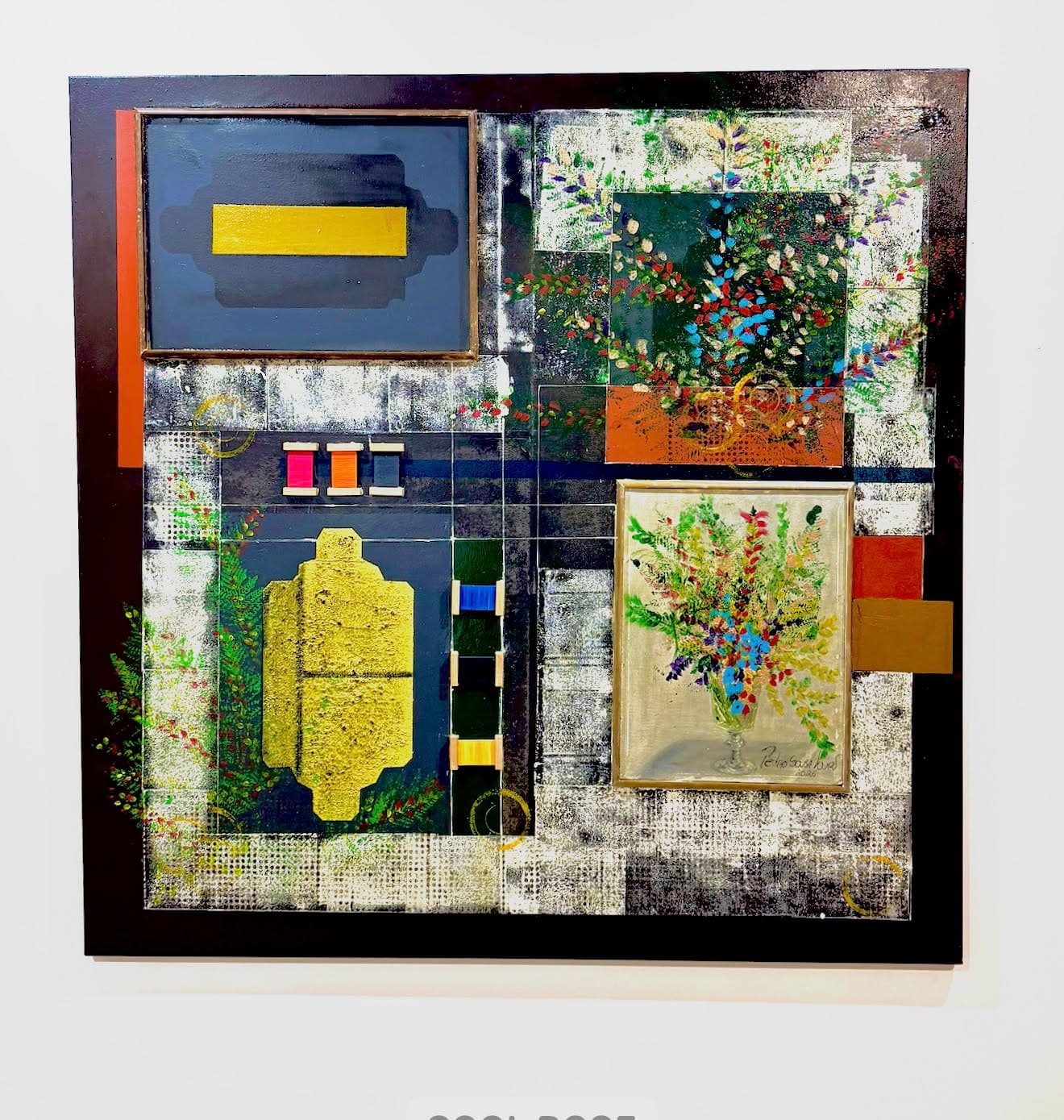
Pedro Sousa is an artist whose practice bridges architecture, geometric composition, and abstract expressionism. Born in Africa into a family originally from Braga, northern Portugal, with aristocratic roots, Sousa brings a distinctive cultural perspective to his exploration of space, structure, and contemporary life. His artistic vision is deeply informed by architecture, not merely as a discipline concerned with buildings, but as a framework for understanding how people inhabit the world and relate to one another.
For Sousa, architecture carries responsibilities that extend beyond aesthetics and financial investment. He believes buildings should respond to the needs of the public while promoting environmental sustainability. This conviction informs his broader creative philosophy, positioning art and architecture as interconnected practices capable of questioning established values and imagining alternative ways of living.
A graduate of Chelsea College of Art and Design, Sousa has developed an artistic language shaped by the structural principles of architecture and the expressive possibilities of abstraction. His compositions explore geometry, balance, and spatial relationships, transforming architectural thinking into visual experiences that invite viewers to reconsider their surroundings and the social systems within which they exist.
Material, Geometry, and the Language of Abstraction
Sousa’s practice draws upon the contrasting sensibilities of Cubism and abstract expressionism. From Cubism, he engages with the fragmentation of forms and the possibility of presenting multiple perspectives within a unified composition. Abstract expressionism offers another dimension, introducing a more intuitive relationship with material, gesture, and visual energy.
His use of diverse materials, including reclaimed wood and oxidised metals, further expands this dialogue. These materials possess histories that precede their incorporation into an artwork. Reclaimed wood carries traces of previous use, while oxidised metal reveals the gradual effects of time and environmental exposure. Together, they offer possibilities for exploring transformation, impermanence, and the relationship between constructed environments and natural processes.
Rather than treating materials as passive surfaces, Sousa incorporates their physical characteristics into his artistic vocabulary. Texture, geometry, and the interplay of different elements contribute to compositions that evoke architectural structures while resisting the limitations of conventional representation. His work occupies a space between the recognisable and the abstract, allowing structural clarity to coexist with interpretive openness.
This approach also reflects his interest in sustainability. The use of reclaimed materials establishes a connection between artistic production and the wider question of how resources are valued, reused, and integrated into contemporary culture.
International Recognition and Creative Collaboration
Sousa’s contributions to the international art world received notable recognition in 2021, when Portuguese President Marcelo Rebelo de Sousa and Manuel Lobo Antunes, the former Portuguese Ambassador to the United Kingdom, honoured him for his work in the international art industry. This recognition marked an important moment in his professional journey, acknowledging his presence within a broader cultural landscape.
His practice has also extended into the world of cinema. In 2023, Sousa announced a collaboration involving 20th Century Studios and Disney USA, with his artworks intended for set design in two upcoming blockbuster productions. The proposed use of his work in cinematic environments points towards the potential for his geometric compositions to operate beyond the gallery, contributing to visual narratives shaped by architecture, atmosphere, and storytelling.
Such interdisciplinary possibilities complement Sousa’s interest in the built environment. Whether encountered as an independent artwork or integrated into a cinematic setting, his visual language engages with the ways constructed spaces influence perception and experience.
“Romantic but no lovers”: Observing Love in a Digital Society
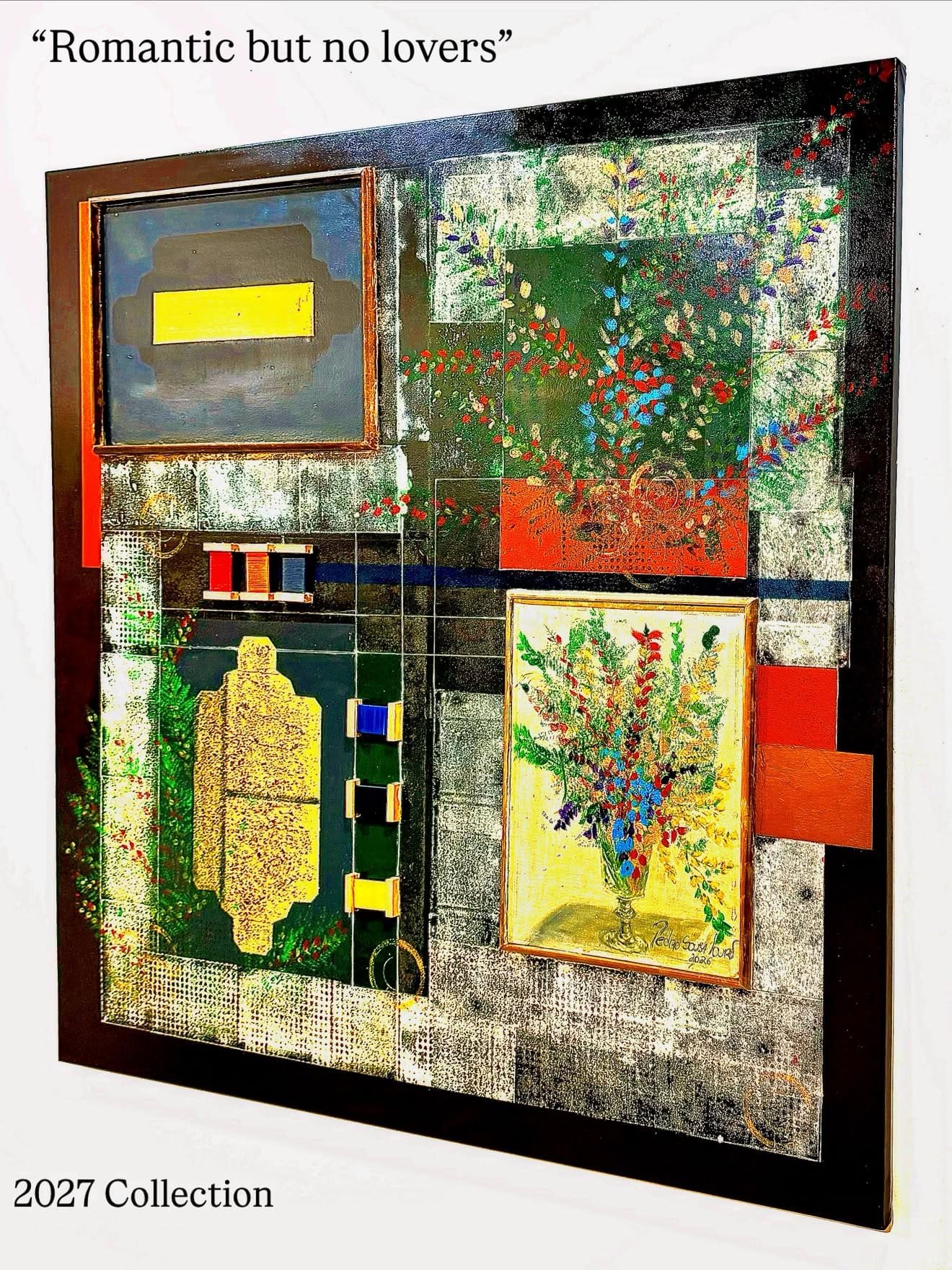
In “Romantic but no lovers,” Sousa turns his attention from architectural structures to the evolving architecture of human relationships. The work emerges from his personal observations of what he describes as a new, technologically influenced format of contemporary romantic life, increasingly visible in cosmopolitan societies.
The title introduces a deliberate tension. Romance traditionally evokes intimacy, emotional commitment, and the possibility of lasting attachment. The absence of lovers, however, suggests a more fluid arrangement in which romantic experiences can exist without necessarily developing into conventional partnerships. Sousa examines this contradiction as a reflection of changing social expectations, digital communication, and the ways individuals negotiate affection in an accelerated world.
His concept considers relationships characterised by movement, changing durations, and uncertain outcomes. Encounters begin and end, emotions fluctuate, and individuals move between connections with varying degrees of attachment. Within this framework, the artist observes a preference for managing transitions through dialogue and practical solutions rather than prolonged conflict. Endings need not produce hostility, and former partners may retain goodwill even when their romantic involvement has concluded.
Social media occupies a central position in this observation. Sousa considers how contemporary relationships are increasingly narrated through individual online identities, where experiences become visible, documented, and communicated to wider audiences. In this environment, personal happiness can become intertwined with the presentation of one’s emotional life, creating a culture in which openness and public acknowledgement carry particular significance.
The work does not simply celebrate or condemn these developments. Instead, it presents a personal interpretation of a social phenomenon marked by both possibility and uncertainty. Greater flexibility may allow individuals to approach relationships with fewer traditional constraints, yet it also raises questions about emotional permanence, genuine intimacy, and the difference between experiencing affection and presenting it publicly.
The Emotional Geometry of Contemporary Life
Although “Romantic but no lovers” addresses relationships rather than buildings, its subject resonates with Sousa’s architectural sensibility. Both architecture and intimacy involve structures, boundaries, arrangements, and the conditions that make certain experiences possible. Relationships, like designed spaces, are shaped by expectations, shared agreements, and the circumstances in which people encounter one another.
The work invites viewers to consider whether contemporary romance is developing its own design language, one defined by flexibility, explicit communication, technological mediation, and changing definitions of commitment. Its central tension lies between the apparent ease of moving through relationships and the deeper human desire for connection and understanding.
Through this exploration, Sousa extends his interest in constructed systems into the emotional and social dimensions of everyday life. His geometric and abstract approach provides a broader context for examining how people organise their environments, their interactions, and their identities.
Pedro Sousa’s artistic practice ultimately brings together material experimentation, architectural thought, and observations of contemporary culture. In “Romantic but no lovers,” he examines a changing landscape of affection and connection, offering viewers an opportunity to reflect on how technology and social expectations reshape intimacy. By approaching modern relationships as another form of evolving structure, Sousa continues to investigate the forces that organise human experience, leaving space for questions that resist simple answers.

