


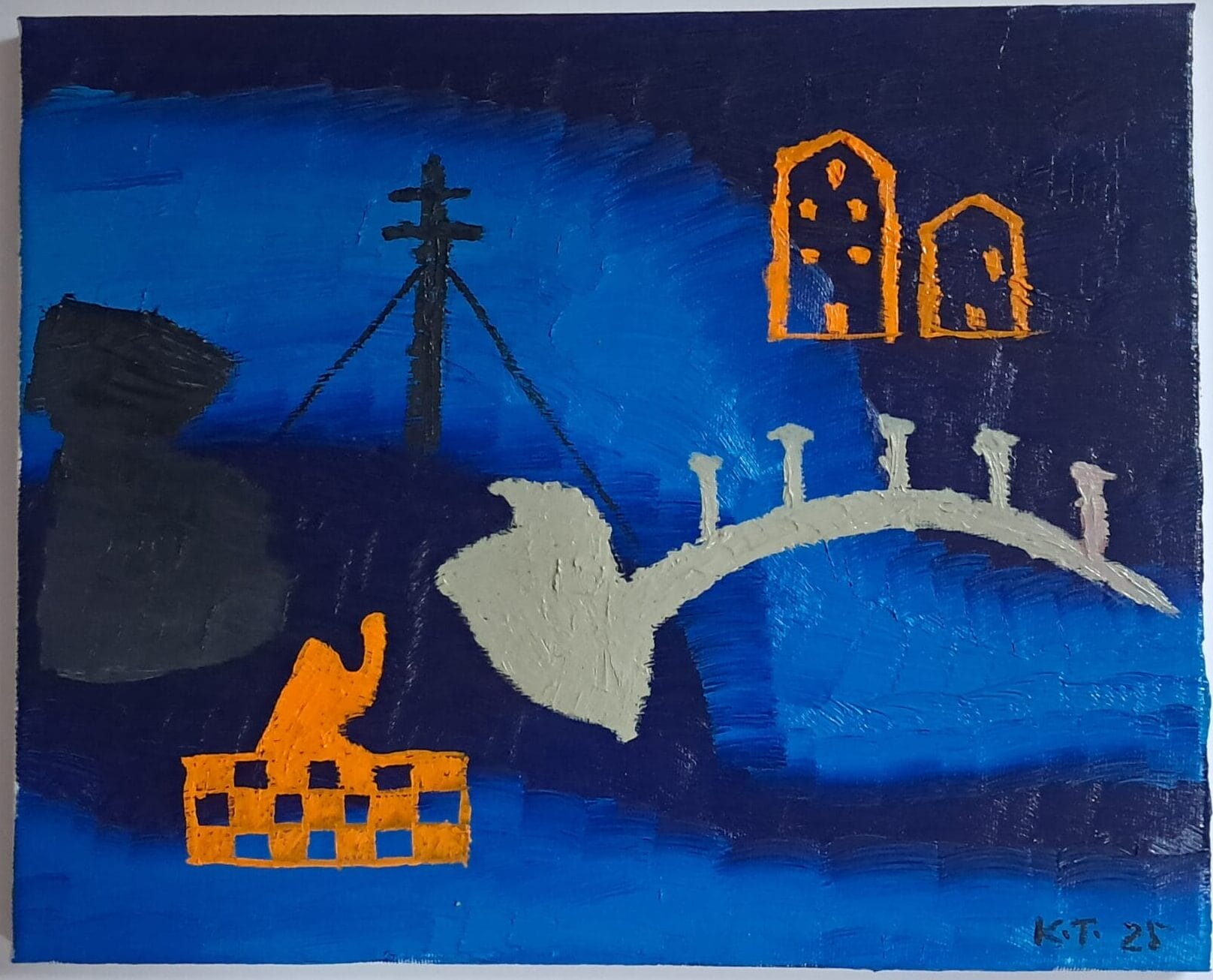
For many artists, the goal of painting is to create beauty, harmony, or a moment of escape. For KillingTide, the purpose of art is entirely different. Rather than offering decorative imagery or peaceful scenes, the artist creates works designed to provoke thought, question accepted realities, and confront viewers with uncomfortable truths.
Every painting by KillingTide is built around symbolism and meaning. The work is not intended to be visually comforting or simply admired for its aesthetic qualities. Instead, each canvas encourages the viewer to pause, examine the imagery, and interpret the messages hidden within the composition.
Working exclusively in oil on canvas, KillingTide combines a dreamlike atmosphere with a deliberately childlike drawing style. This contrast creates an unusual visual language that appears simple at first glance but gradually reveals layers of symbolism and narrative. Every element found within the paintings is an original creation developed by the artist to communicate specific ideas about humanity, society, freedom, and control.
A Personal Visual Language
One of the defining characteristics of KillingTide’s work is the consistent use of recurring symbols. These symbols form a visual vocabulary that appears across multiple paintings, allowing viewers to recognize connections between different works while discovering new interpretations.
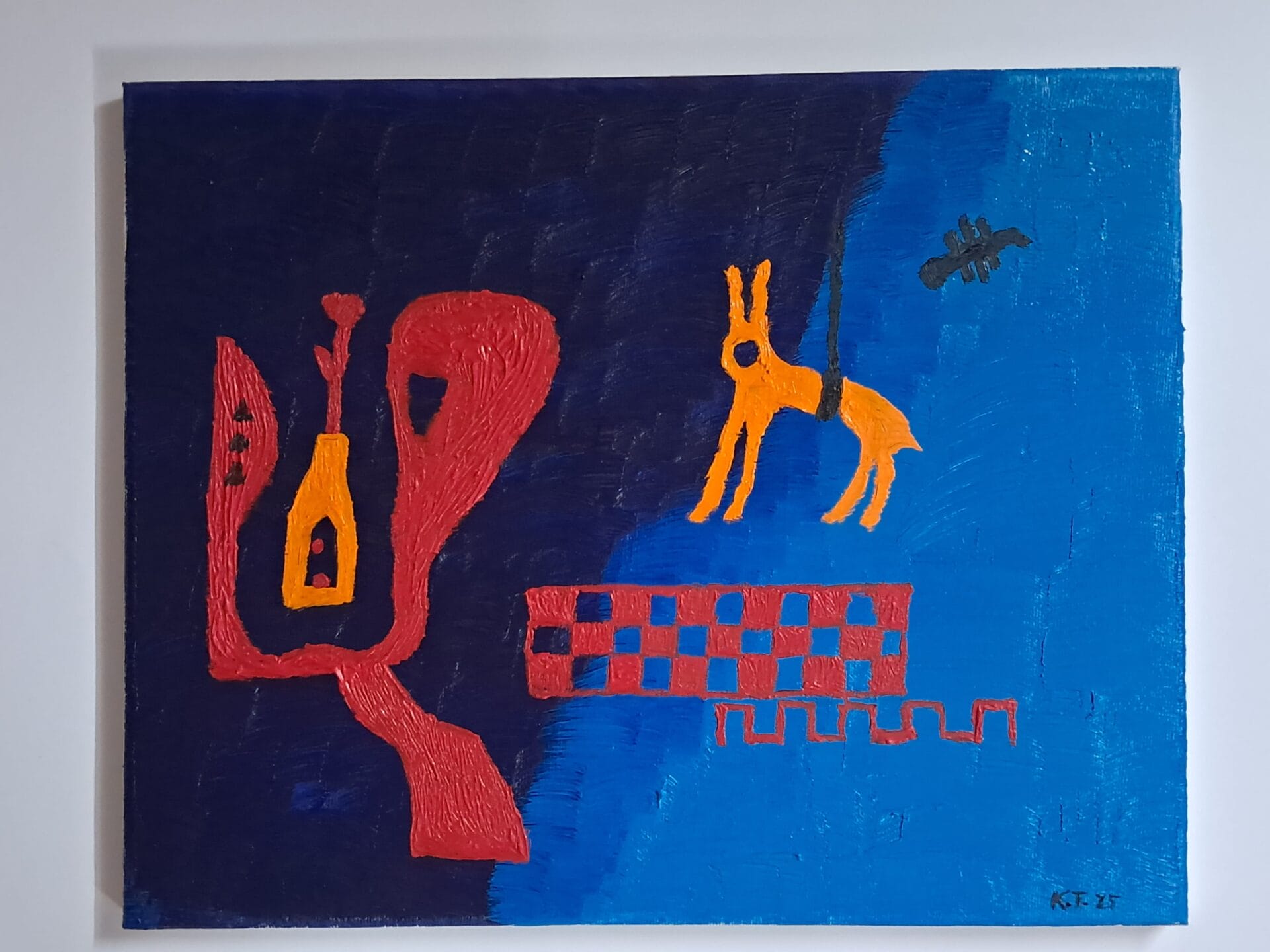
Buildings and houses, for example, are intentionally left unpainted or empty. According to the artist, these structures symbolize the idea that ownership is often an illusion and that what people believe belongs to them is ultimately controlled by larger systems.
Crows appear frequently throughout the paintings as symbols of freedom. In the artist’s interpretation, these birds possess a freedom that humanity has largely surrendered through social structures and mental limitations. Their presence introduces a striking contrast between the natural world and the constructed realities of modern life.
Human figures are often simplified into body forms painted in a single color. This reduction removes unnecessary detail, directing attention toward symbolism rather than identity. The figures become representations of humanity as a whole rather than portraits of individuals.
Dead trees also occupy an important place within KillingTide’s imagery. They stand as reminders of mortality, decline, and the inevitable end of life, reinforcing the darker themes that run throughout the artist’s body of work.
Symbols of Systems and Power
Among the most recognizable recurring motifs is a figure the artist refers to as “The Pope.” Within KillingTide’s symbolic framework, this image represents institutions of power and control. The figure is depicted with numerous upright and inverted crosses alongside red crosses, each carrying meanings assigned by the artist.
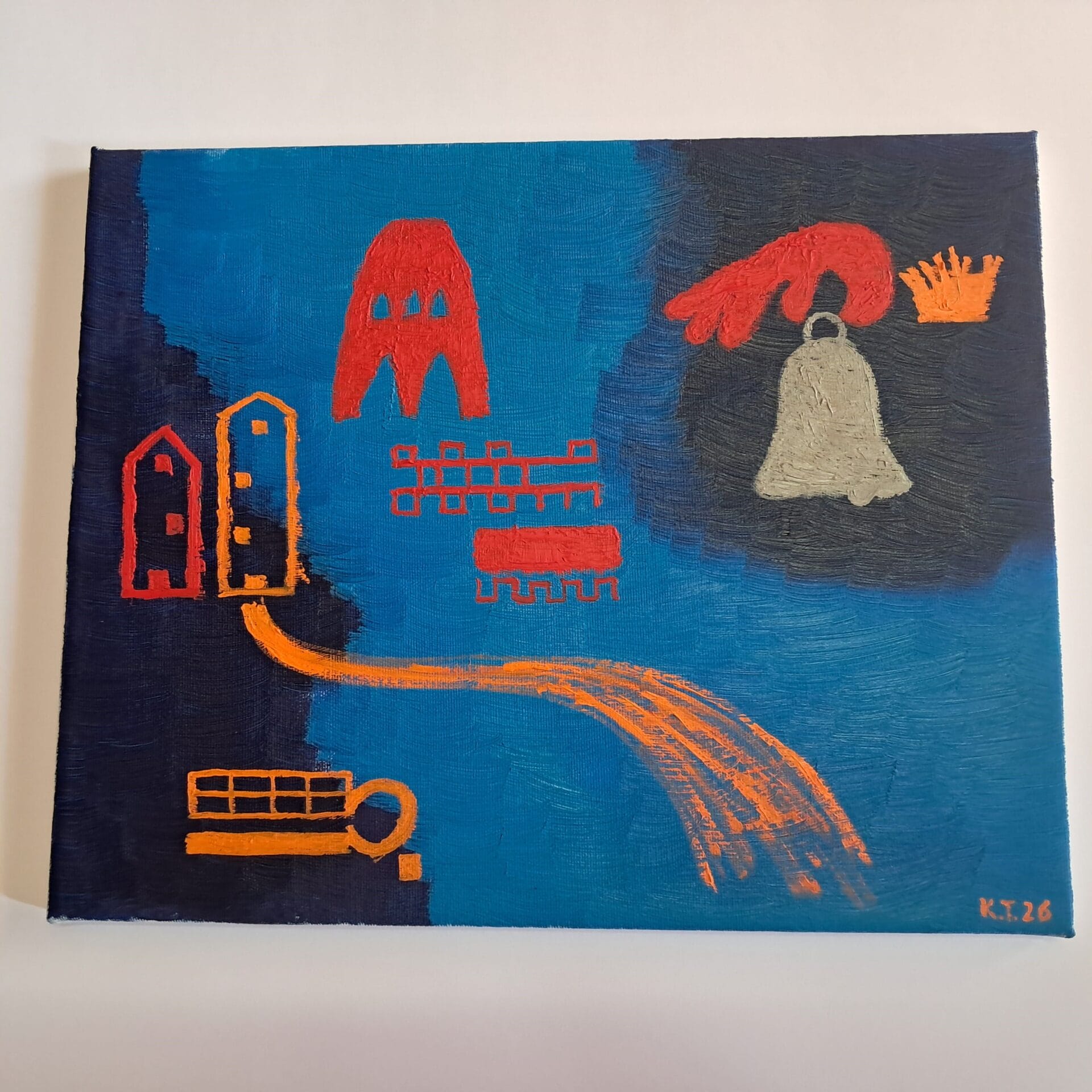
The artist explains that these crosses symbolize themes connected to religion, occult imagery, humanitarian organizations, and institutional authority. Together they become visual representations of systems that, in the artist’s view, influence society through visible and hidden structures.
Another recurring element consists of rectangles containing filled or empty squares. These geometric forms represent what the artist calls “The Program,” a symbolic concept describing the ways society is shaped through institutions, education, media, and cultural expectations. Rather than functioning as decorative patterns, these shapes serve as reminders of the frameworks that influence individual thought and collective behavior.
Whether viewers agree with these interpretations or not, these symbols demonstrate the artist’s commitment to creating a cohesive visual language that extends across the entire collection.
Painting Human Cruelty
At the heart of KillingTide’s work lies an exploration of humanity’s capacity for cruelty.
Many of the paintings examine emotional, psychological, and societal forms of oppression rather than physical conflict alone. Mental slavery is a recurring subject, representing the ways individuals may become trapped by fear, conformity, expectation, or unquestioned beliefs. The artist views these invisible forms of control as some of the most significant challenges facing modern society.
Instead of depicting idealized worlds, the paintings deliberately focus on difficult realities. Scenes often evoke discomfort, uncertainty, or sadness, encouraging viewers to question why these emotions arise. The intention is not to shock for its own sake but to create opportunities for reflection.
This philosophy separates KillingTide’s work from art created primarily for decoration. The paintings ask viewers to engage intellectually rather than passively consume imagery.
Dreamlike Worlds with Childlike Simplicity
Although the themes explored are often serious and complex, the visual execution remains intentionally simple. The childlike drawing style creates an unexpected contrast with the philosophical weight of the subject matter.
This simplicity allows symbols to stand out without unnecessary distraction. At the same time, the dreamlike compositions introduce ambiguity, inviting viewers to form their own interpretations while considering the meanings proposed by the artist.
The result is artwork that exists somewhere between imagination and social commentary. Familiar objects become symbolic, ordinary spaces feel surreal, and straightforward compositions reveal increasingly complex ideas with extended viewing.
Inviting Thought Rather Than Agreement
KillingTide does not expect every viewer to share the same perspective presented in the paintings. Instead, the artist’s objective is to encourage independent thinking.
The work challenges audiences to ask questions rather than accept immediate answers. Whether examining themes of freedom, authority, institutional influence, or human behavior, the paintings seek to spark conversations that extend beyond the gallery wall.
The artist believes that genuine reflection is an essential part of personal freedom. While many people naturally seek comfort, familiarity, or reassurance, these paintings intentionally move in the opposite direction, inviting viewers to engage with ideas that may be difficult, unsettling, or controversial.
Beyond Decoration
In today’s art world, many works are created to complement interior spaces or provide visual pleasure. KillingTide consciously rejects this approach.
These paintings are not designed to become background decoration. Their purpose is to communicate messages, provoke discussion, and encourage viewers to examine both themselves and the society around them. Every brushstroke, symbol, and composition serves this larger objective.
Through original symbolism, dreamlike imagery, and a deeply personal artistic philosophy, KillingTide has developed a distinctive body of work that prioritizes meaning over ornamentation. Rather than asking viewers to simply admire a painting, the artist asks them to think and perhaps leave with more questions than answers.
For KillingTide, that conversation is where the true artwork begins.

