


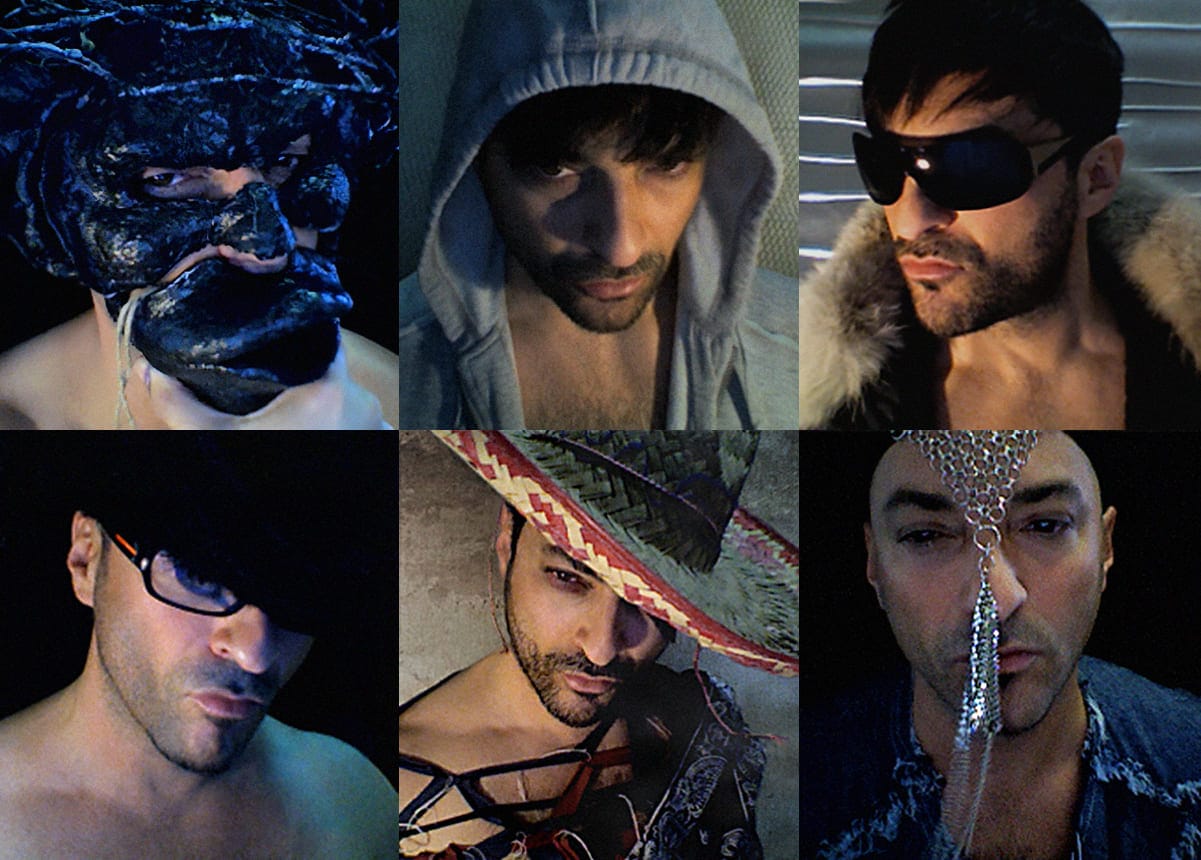
Adamo Macri’s conceptual portraiture did not emerge from a planned artistic strategy or a long-standing fascination with self-portraiture. In fact, at the beginning of his artistic life, he had no interest in portraying himself at all. His creative practice developed across multiple disciplines, but self-imaging was never part of his intention. The shift came only later when the rapid rise of social media began reshaping how images, identity, and visibility function in everyday life.
Macri’s turn toward conceptual portraiture was therefore not a stylistic decision but a response to a cultural disruption. As platforms like Myspace and Facebook gained popularity, they created new ways for artists to publish work, reach audiences, and receive immediate feedback. For Macri, the early positive reception of his work online was a revelation. Curators began reaching out, audiences expanded, and visibility increased in ways that traditional routes had not made possible. But alongside this opportunity came something more complex, a sudden cultural obsession with the face itself, especially through profile pictures and selfies.
Social Media as a New Visual Theatre
Rather than treating social media as a casual space for self-documentation, Macri recognized it as a new kind of visual system that was quietly transforming identity into performance. What others experienced as entertainment or routine posting, he began to see as artistic material. The profile picture, the selfie, and the constant circulation of faces online revealed a deeper shift. Identity was no longer simply expressed. It was staged, curated, and repeatedly consumed.
Macri responded by refusing to participate in this system in a conventional way. He did not produce an endless stream of ordinary personal images. Instead, he began to treat Facebook itself as an artistic medium. He famously described this approach as engaging with Facebook as a “verb” rather than a noun, an action rather than a platform. In doing so, he repositioned the act of posting from self-display to conceptual practice.
This distinction became central to his work. The face was no longer a document of identity but a site of transformation. Rather than reinforcing familiarity, his images began to destabilize it.
From Self-Portrait to Conceptual Transformation
Although many of Macri’s works are commonly referred to as self-portraits, he has consistently resisted this label. Traditional self-portraiture typically aims to represent the artist in some form, whether realistic, symbolic, or psychological. Macri’s practice moves away from this expectation entirely.
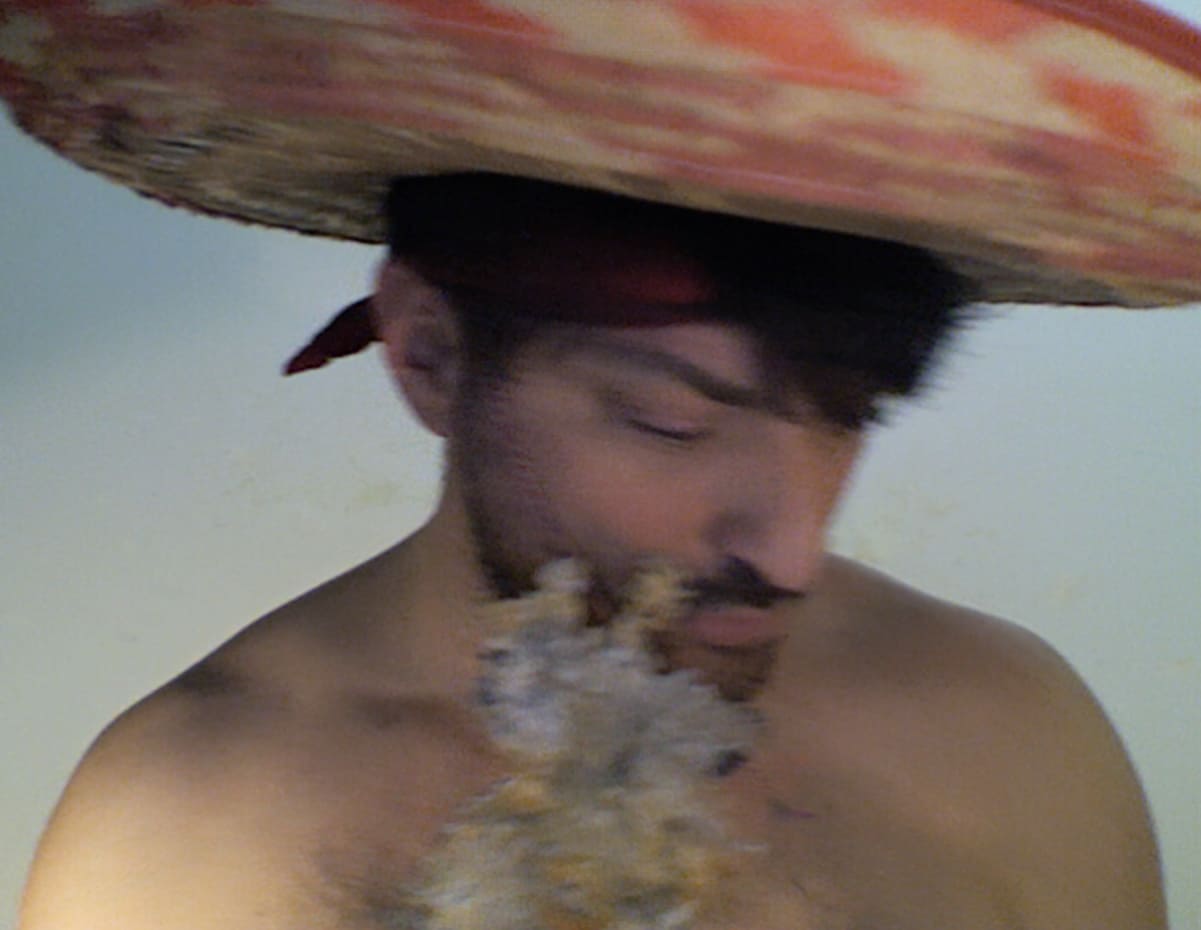
Instead, he uses his own body and face as raw material for conceptual construction. His images are not about likeness or autobiographical revelation. They are about transformation, interpretation, and the visual translation of ideas. He has described his process as imagining what it would feel like to ingest a novel, film, or narrative, and then asking how that internal experience might physically manifest through his appearance.
In this sense, the artist does not portray himself as he is, but as he might become under the influence of ideas, stories, and symbolic systems. The result is a body of work in which identity is constantly reconfigured, and the face becomes a vessel for thought rather than a fixed representation of self.
Narrative Compression and Visual Symbolism
A defining characteristic of Macri’s conceptual portraiture is its ability to compress narrative into a single image. Rather than unfolding a story over time, each work functions as a condensed visual event. Costume, lighting, props, gesture, and facial concealment all contribute to this compression, forming layered meanings that operate simultaneously.
These elements are not decorative. They are structural tools used to construct meaning. Masks, veils, and forms of partial concealment appear frequently in the work, creating a tension between visibility and withdrawal. The more the image obscures the artist’s literal identity, the more it draws attention to the act of representation itself.
This paradox is central to the practice. As demand for recognizable images of the artist increased, Macri moved further into symbolic transformation. The pressure for transparency did not result in greater exposure, but in greater complexity. The face became less a point of recognition and more a site of conceptual resistance.
Kenneth Radu and the Critical Framing of the Work
A major turning point in the reception of Macri’s work came with Kenneth Radu’s 2011 essay, Facing the Faces: the Facebook Self-portraits of Adamo Macri. The text played a crucial role in articulating what the practice was becoming, even as Macri himself was still defining it.
Radu identified the significance of Macri’s work within the evolving conditions of digital culture. He positioned the portraits not as traditional self-portraits or simple social media images, but as a study in contemporary identity formation. In Radu’s reading, the face in Macri’s work becomes a space where performance, vulnerability, and reinvention intersect.
Importantly, Radu also situated the work within a broader historical trajectory. While self-portraiture has a long tradition in Western art, Macri’s approach belongs to a new technological era shaped by webcams, social networks, and instantaneous image circulation. Unlike static painted portraits, these digital works exist within a fluid environment where identity can shift rapidly and continuously.
Identity, Performance, and Digital Culture
Radu’s essay emphasized one of the most significant aspects of Macri’s practice, its reflection of contemporary identity as something constructed rather than inherent. In the social media age, the self is not simply revealed. It is performed, edited, and repeatedly re-authored.
Macri’s portraits make this process visible. They expose the tension between public persona and private self, between authenticity and theatricality. Costume and symbolism allow multiple identities to coexist within a single frame, while still maintaining a recognizable human presence beneath the layers of transformation.
The viewer is therefore not given a fixed meaning, but an interpretive field. Each image invites speculation rather than resolution. In this way, the work mirrors the ambiguity of digital identity itself.
The Emergence of Conceptual Portraiture
Over time, what began as a response to social media evolved into a sustained artistic language that Macri has described as “conceptual portraiture.” This term reflects the expanded nature of the practice, which goes beyond representation to engage with ideas, narratives, and systems of meaning.
In this framework, portraiture is no longer about capturing a person’s appearance. It becomes a process of constructing meaning through the interplay of image and concept. The artist is both subject and medium, yet never fully reducible to either role.
This approach also reflects a broader cultural shift. As digital life increasingly shapes how individuals present themselves, Macri’s work functions as both documentation and critique of that condition. It captures a moment in which identity is constantly negotiated through images.
Conclusion: The Face as a Site of Transformation
Fifteen years after its emergence, Adamo Macri’s conceptual portraiture stands as both a personal artistic evolution and a reflection of a wider cultural transformation. What began as an unexpected response to Facebook has developed into a sustained inquiry into identity, visibility, and representation.
At its core, the practice challenges the assumption that portraiture must reflect a stable self. Instead, it proposes that the face is a dynamic surface, capable of holding contradiction, fiction, narrative, and abstraction. The image does not simply show who we are; it reveals how identity is constructed, performed, and continuously reshaped.
In Macri’s work, the portrait becomes something else entirely, not a mirror of the self, but a site where the self is actively reimagined.

