


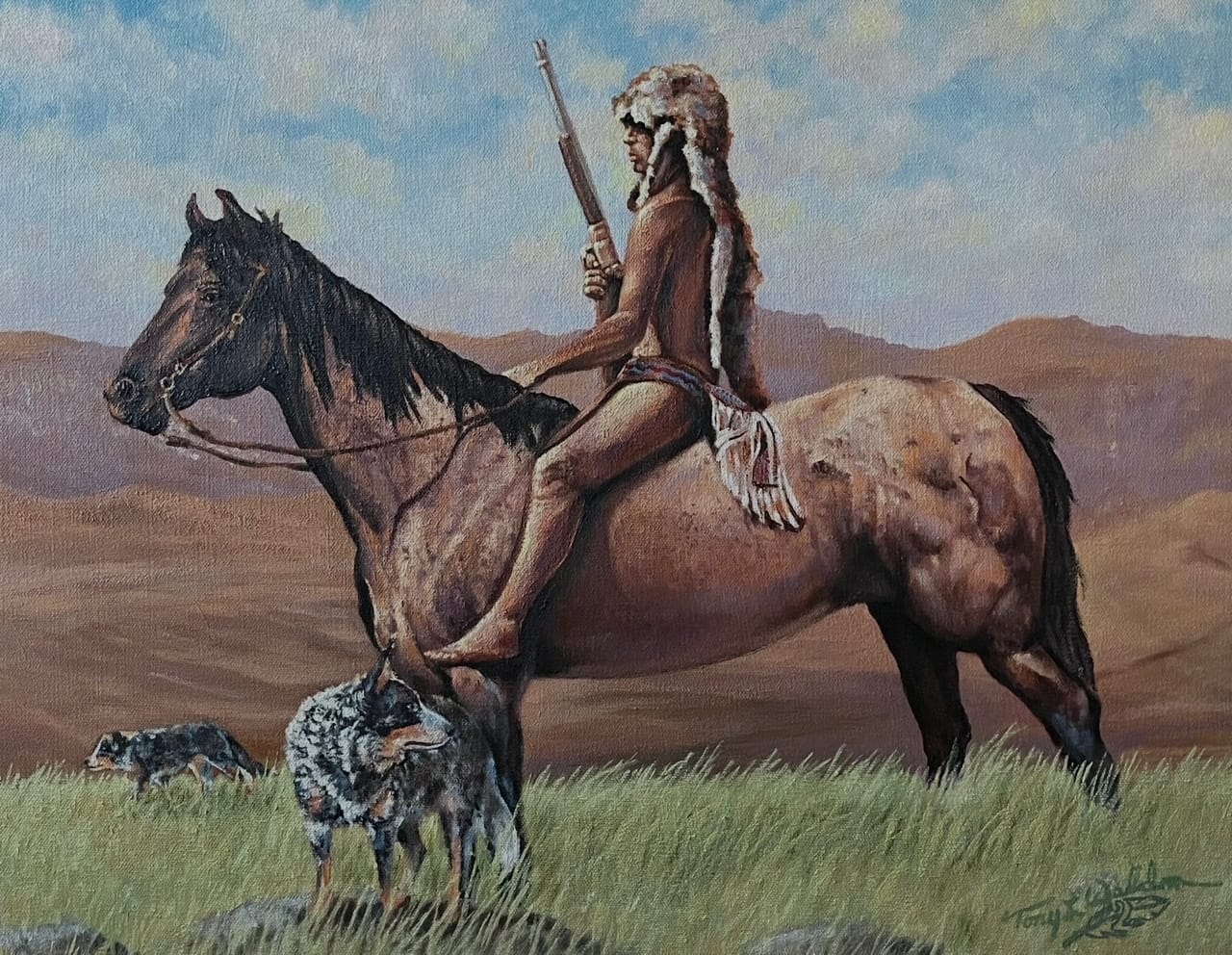
In a world often shaped by fleeting trends, some artists dedicate their work to preserving stories that deserve to endure. Tony, Two Feather Weldon is one such artist. Through powerful historical paintings, Weldon explores the lives, traditions, landscapes, and relationships of Native American Indigenous peoples, creating works that invite viewers to look beyond the present and connect with a deeply rooted cultural history.
For Weldon, this artistic mission is closely connected to his own family history. His grandfather shared stories about his full-blood Cherokee mother, Weldon’s great-grandmother. Those family stories became an important starting point for his interest in Native American history and eventually encouraged him to undertake extensive research into his ancestry and the histories of Native American tribes more broadly.
What began as a personal desire to understand his heritage developed into a broader artistic purpose. Weldon became increasingly interested in discovering the stories, traditions, environments, and experiences that shaped Indigenous communities. His paintings grew from this combination of family memory, historical research, and a desire to communicate these stories to wider audiences.
Research as the Foundation of His Art
Historical painting requires more than technical ability. For an artist such as Weldon, creating a convincing representation of the past also involves understanding the people and cultures being portrayed. His creative process is therefore deeply connected to research.
Weldon draws inspiration from historical writings as well as personal anecdotes and stories he encounters during his exploration of Native American history. He researches the attire, customs, environments, and ways of life associated with the subjects he depicts. This attention to historical context allows his paintings to become more than visual interpretations; they become carefully considered reflections of a particular time, place, and culture.
His commitment to research also reflects the respect he has for his subjects. Rather than treating history as a distant collection of dates and events, Weldon approaches it through the human stories that give the past meaning. Families, individuals, animals, landscapes, and communities all become important elements within his visual narratives.
Through this process, every painting carries a sense of intention. The details are not merely decorative. They help establish a connection between the viewer and the world Weldon is attempting to portray.
A Style Between Realism and Impressionism
Weldon’s artistic language brings together elements of realism and impressionism. This combination enables him to balance recognizable historical detail with an expressive use of color, atmosphere, and movement.
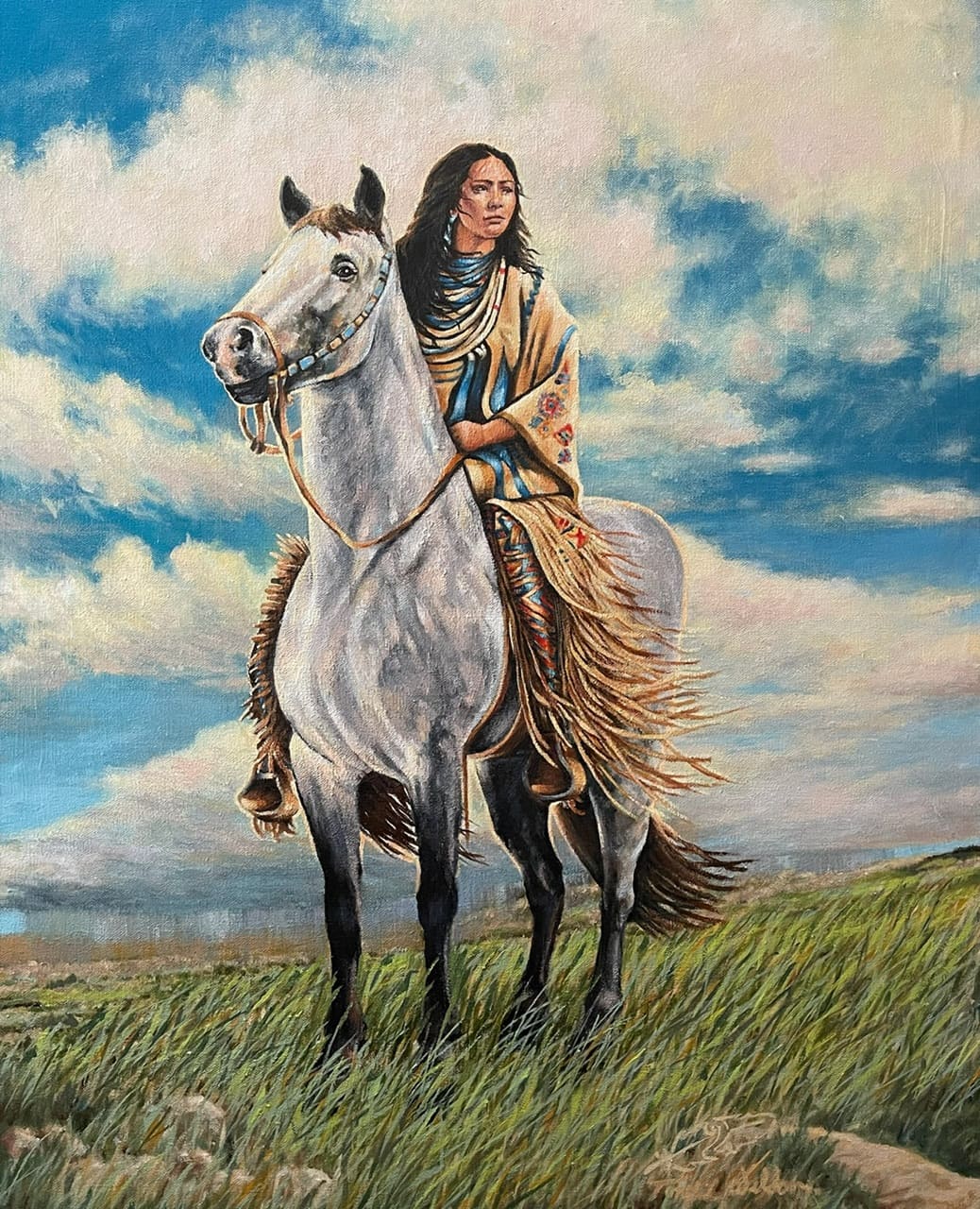
He primarily works with acrylic paints on gallery-wrapped canvas, a medium that allows him to develop both precise details and luminous visual effects. His paintings are often rich in color, helping communicate the vitality of the people, landscapes, wildlife, and cultures represented in his work.
Whether he is portraying a historical figure, a family scene, a natural environment, or wildlife, Weldon gives careful attention to the character and atmosphere of the subject. His approach does not simply focus on physical appearance. Instead, he seeks to communicate something about the spirit and emotional presence of the people and environments he portrays.
The combination of realistic observation and impressionistic expression gives his work a distinctive quality. Viewers can recognize the historical subject while also experiencing the atmosphere and emotion surrounding it.
People, Families, and the Natural World
A recurring theme throughout Weldon’s work is the relationship between Native American Indigenous peoples and the natural world. His paintings explore not only historical lifestyles but also the connections between individuals, families, animals, and the landscapes they inhabited.
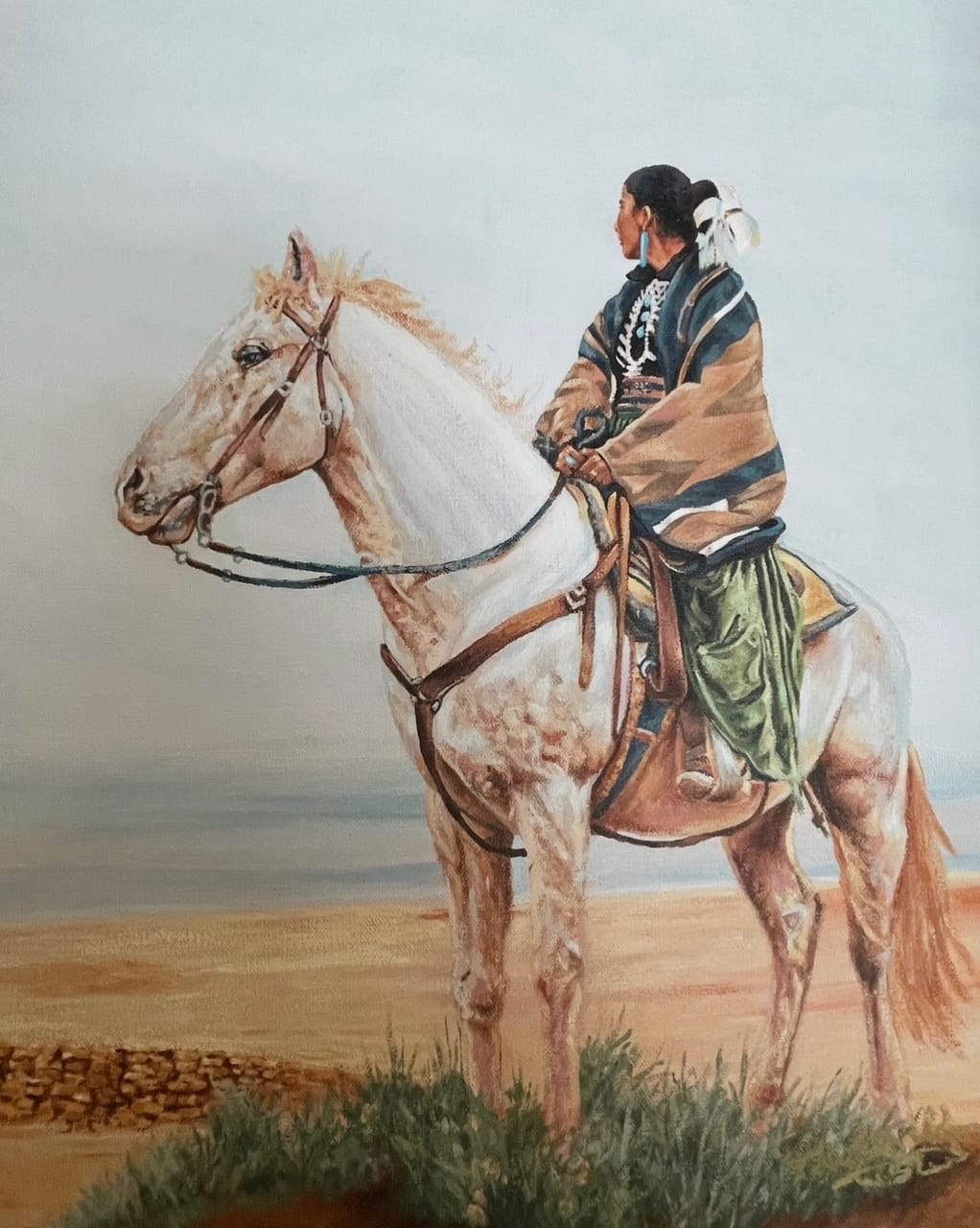
This perspective is particularly important because the land within Weldon’s paintings is not simply a background. Landscapes and wildlife form an integral part of the stories he tells. Mountains, forests, open spaces, animals, and other elements of nature contribute to the atmosphere and meaning of his compositions.
His historical portraits similarly emphasize the humanity of the individuals he depicts. Through facial expressions, posture, clothing, and surrounding details, Weldon seeks to present his subjects with dignity and individuality.
Family relationships are another important element in his artistic vision. His interest in stories passed down through generations informs his understanding of history as something that can be preserved through personal memory. In this sense, his paintings become connected to the broader idea of storytelling between generations.
Creating Art With a Sense of Purpose
For Weldon, painting is not simply an exercise in creating visually compelling images. His work reflects a larger commitment to historical preservation and cultural recognition.
His paintings encourage audiences to learn about Native American Indigenous history while considering the people behind that history. By focusing on lifestyles, families, landscapes, and individual figures, he creates an entry point for viewers who may not otherwise encounter these stories.
The emotional quality of his paintings is equally important. Historical information can sometimes feel distant, but art can make it immediate. A portrait can encourage viewers to consider the life of one individual. A family scene can communicate relationships that words alone may struggle to describe. A landscape can evoke the profound relationship between a community and its environment.
This ability to combine education with emotional engagement gives Weldon’s work a meaningful role in contemporary historical art.
Looking Toward New Exhibitions
Weldon continues to develop his artistic practice through new projects and exhibitions. He has been creating new historical portraits of Native American figures for an upcoming July 4th art exhibition in Georgia. The project represents another opportunity for him to explore heritage and history through portraiture.
His work is also connected with the 2026 Earth Art Exhibit, an online group exhibition hosted by Exhibition Zone and the Biafarin platform during May 2026. The exhibition focuses on celebrating Earth and those who respect and care for it, making it particularly relevant to Weldon’s artistic themes.
The connection between Indigenous peoples and the natural world is central to much of his artistic vision. By presenting people alongside the landscapes and wildlife that form part of their stories, Weldon highlights a relationship with nature that remains an important part of his historical perspective.
Keeping Stories Alive Through Painting
Tony, Two Feather Weldon’s art demonstrates how painting can become a form of historical storytelling. His work brings together family memories, extensive research, technical skill, and a genuine desire to preserve stories connected to Native American Indigenous peoples.
His paintings are rooted in history, yet they are created for contemporary audiences. Through expressive color, detailed historical research, and a style that combines realism with impressionistic qualities, Weldon gives his subjects a vivid presence.
Most importantly, his work encourages viewers to recognize history through human experience. The people he portrays are not simply figures from the past; they represent families, communities, traditions, relationships, and lives shaped by the land around them.
As Weldon continues creating new historical portraits and participating in exhibitions, his artistic journey remains closely connected to his original inspiration: the stories passed down through his family. By transforming those stories and his broader historical research into paintings, he contributes to an ongoing conversation about heritage, memory, culture, and respect.
His canvases ultimately serve as more than representations of the past. They are invitations to look, learn, and remember. Through his dedication to historical storytelling, Tony, Two Feather Weldon continues working to ensure that the history, dignity, resilience, and cultural legacy of Native American Indigenous peoples remain visible and meaningful for generations to come.

