


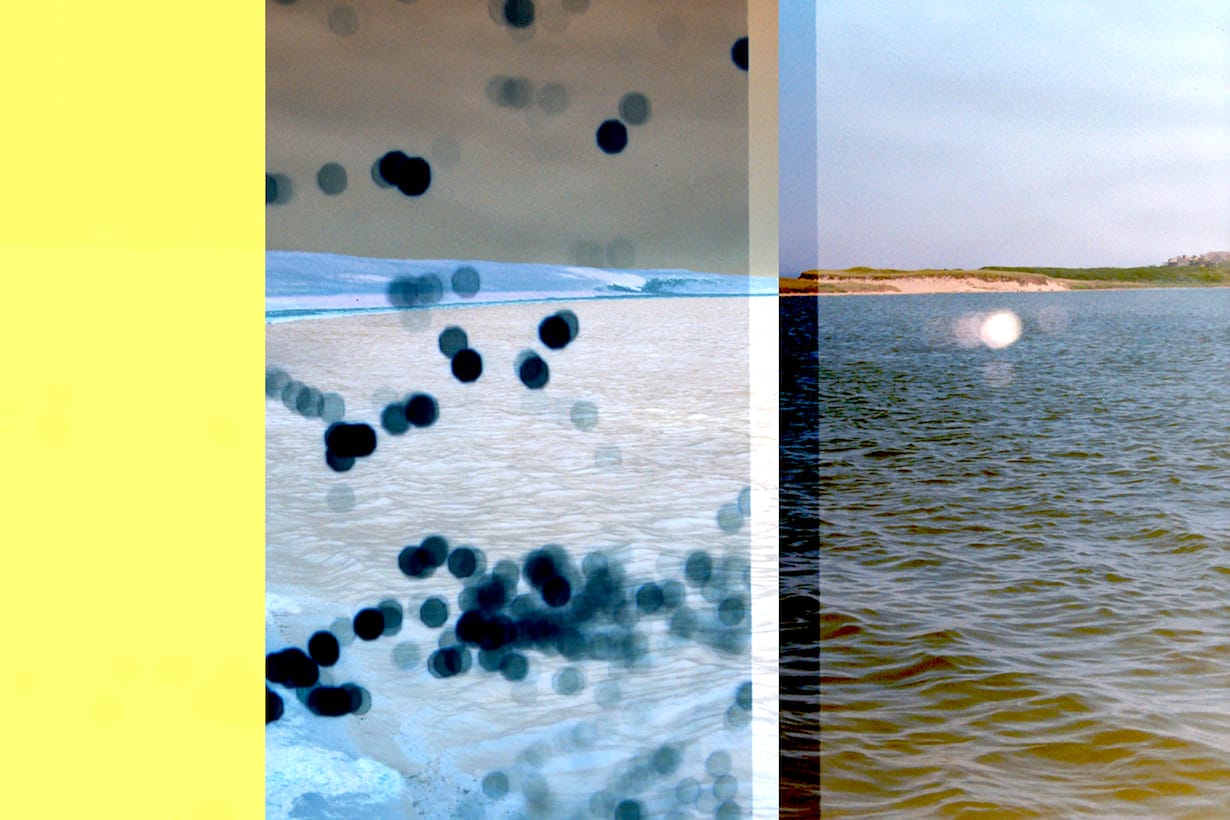
Leah Oates is a contemporary artist whose work explores the fragile and ever-changing relationship between human presence and the natural world. Through her thoughtful visual language, Oates examines environments that exist in a constant state of transformation, places where time, human influence, and natural forces intersect. Her work reflects a deep curiosity about how landscapes evolve and how temporary moments within these spaces can be preserved through art. One such work, “Transitory Space, Nantucket, Massachusetts #2A,” exemplifies this exploration, revealing the beauty and vulnerability found within locations shaped by change.
Academic Background and Artistic Development
Leah Oates has built a strong foundation through formal training at some of the most respected institutions in the art world. She earned her Bachelor of Fine Arts from the Rhode Island School of Design, an institution known for cultivating innovative artists across multiple disciplines. Her academic journey continued at the School of the Art Institute of Chicago, where she completed her Master of Fine Arts and further refined her conceptual and technical approach to art.
In addition to these achievements, Oates was awarded a prestigious Fulbright Fellowship, which allowed her to study at Edinburgh College of Art in Scotland. This international experience broadened her artistic perspective and exposed her to new cultural landscapes and creative methodologies. Such academic and global influences have helped shape the intellectual depth and visual sensitivity that characterize her work today.
Exhibition History and Artistic Recognition
Over the years, Leah Oates has exhibited extensively in both solo and group exhibitions across major art centers. Her solo shows have been presented in New York City, Toronto, and Chicago, demonstrating the wide appeal and recognition of her work. Institutions and galleries such as Remote Gallery, Susan Eley Fine Art, Artemisia Gallery, the Central Park Arsenal Gallery, Real Art Ways, the Brooklyn Public Library, and the MTA Arts program have showcased her projects.
In addition to solo exhibitions, Oates has participated in numerous group shows throughout the New York City region and Toronto. These exhibitions have taken place in respected venues including John Aird Gallery, Arta Gallery, Papermill Gallery, Wave Hill, the Edward Hopper House, and The Pen and Brush. Through these platforms, her work has reached diverse audiences and contributed to contemporary discussions surrounding landscape, urban transformation, and environmental awareness.
The Concept of Transitory Spaces
At the heart of Leah Oates’ artistic practice lies the concept of transitory spaces locations that exist in a state of ongoing transformation. These spaces may be urban areas undergoing development, natural landscapes shaped by environmental changes, or hybrid environments where human activity and nature intersect.
Oates approaches these spaces as living environments rather than static scenes. They contain traces of time, movement, and human presence. Buildings weather, vegetation shifts, shorelines erode, and communities reshape the spaces they inhabit. By focusing on such locations, Oates highlights the idea that landscapes are never fixed; they are constantly evolving narratives shaped by countless forces.
Transitory spaces also embody a sense of impermanence. They remind viewers that the environments we experience today may not exist in the same form tomorrow. Through her work, Oates invites audiences to observe these fleeting moments and reflect on the delicate balance between permanence and change.
Transitory Space, Nantucket, Massachusetts #2A
The artwork “Transitory Space, Nantucket, Massachusetts #2A” is part of Oates’ broader Transitory Space series. This series explores places where time, natural conditions, and human activity converge to create environments that feel both vibrant and vulnerable.
Nantucket, with its coastal landscape and rich historical identity, provides a compelling setting for this exploration. The island is shaped by both natural forces such as wind, tides, and weather and by centuries of human habitation and architectural development. Oates’ artwork captures this dynamic relationship, presenting the location not merely as a scenic destination but as a site of continuous transformation.
Within the piece, the environment becomes a record of movement and change. Structures, textures, and elements of the landscape suggest layers of time. The viewer senses that the location is not frozen but exists in a state of transition. This sense of flux is central to the concept of the Transitory Space series.
The Energy of Human Presence
One of the defining ideas behind the Transitory Space series is the notion of messy human energy. Unlike untouched natural landscapes, these environments bear visible evidence of human involvement, construction, decay, adaptation, and intervention.
Oates does not portray these marks as purely destructive or purely beneficial. Instead, she presents them as part of the living identity of a place. The spaces she studies are shaped by human needs, habits, and histories. Footpaths emerge, buildings age, and structures are altered or replaced. These layers of human activity create a sense of immediacy and complexity within the landscape.
In “Transitory Space, Nantucket, Massachusetts #2A,” this energy becomes part of the artwork’s emotional resonance. The viewer encounters a place that feels inhabited and alive, even if people are not physically present in the image. The traces of their actions remain embedded in the environment.
Beauty and Fragility in Changing Landscapes
A central theme in Oates’ work is the coexistence of beauty and fragility. Transitory spaces are visually compelling precisely because they sit on the edge of change. Their textures, colors, and structures reveal both resilience and vulnerability.
Coastal environments like Nantucket often illustrate this duality. They are shaped by powerful natural processes erosion, shifting sand, and evolving shorelines while also being sites of human settlement and cultural history. Oates’ work acknowledges this delicate balance.
By capturing these spaces through her artistic lens, she creates what might be described as temporary monuments to fleeting moments in time. The artwork preserves a visual record of a place that may soon change, reminding viewers that landscapes are living systems rather than fixed backdrops.
Reflecting on the Ephemeral Nature of Existence
Ultimately, the Transitory Space series invites viewers to reflect on a broader philosophical idea, the ephemeral nature of existence. Just as landscapes evolve, human life and culture are also shaped by time and transformation.
Oates’ work encourages us to pause and observe the subtle details of environments we might otherwise overlook. In doing so, she transforms ordinary locations into spaces of contemplation. The viewer becomes aware of the delicate processes unfolding within the landscape and the role humanity plays within them.
Through this perspective, her art becomes more than a representation of place. It becomes a meditation on time, change, and the interconnectedness of natural and human systems.
Conclusion
Leah Oates has developed a compelling body of work that examines the shifting boundaries between nature, urban environments, and human presence. With an academic background that includes the Rhode Island School of Design, the School of the Art Institute of Chicago, and a Fulbright Fellowship at Edinburgh College of Art, she brings both intellectual depth and visual sensitivity to her artistic practice.
Her Transitory Space series, including the work “Transitory Space, Nantucket, Massachusetts #2A,” captures environments in moments of transformation. These locations are alive with movement, shaped by time and human activity, and marked by both beauty and fragility.
By focusing on these evolving landscapes, Oates reminds us that the world around us is constantly changing. Her artwork serves as a thoughtful record of these transitions temporary monuments that preserve the fleeting yet meaningful moments that define our shared environment.

