


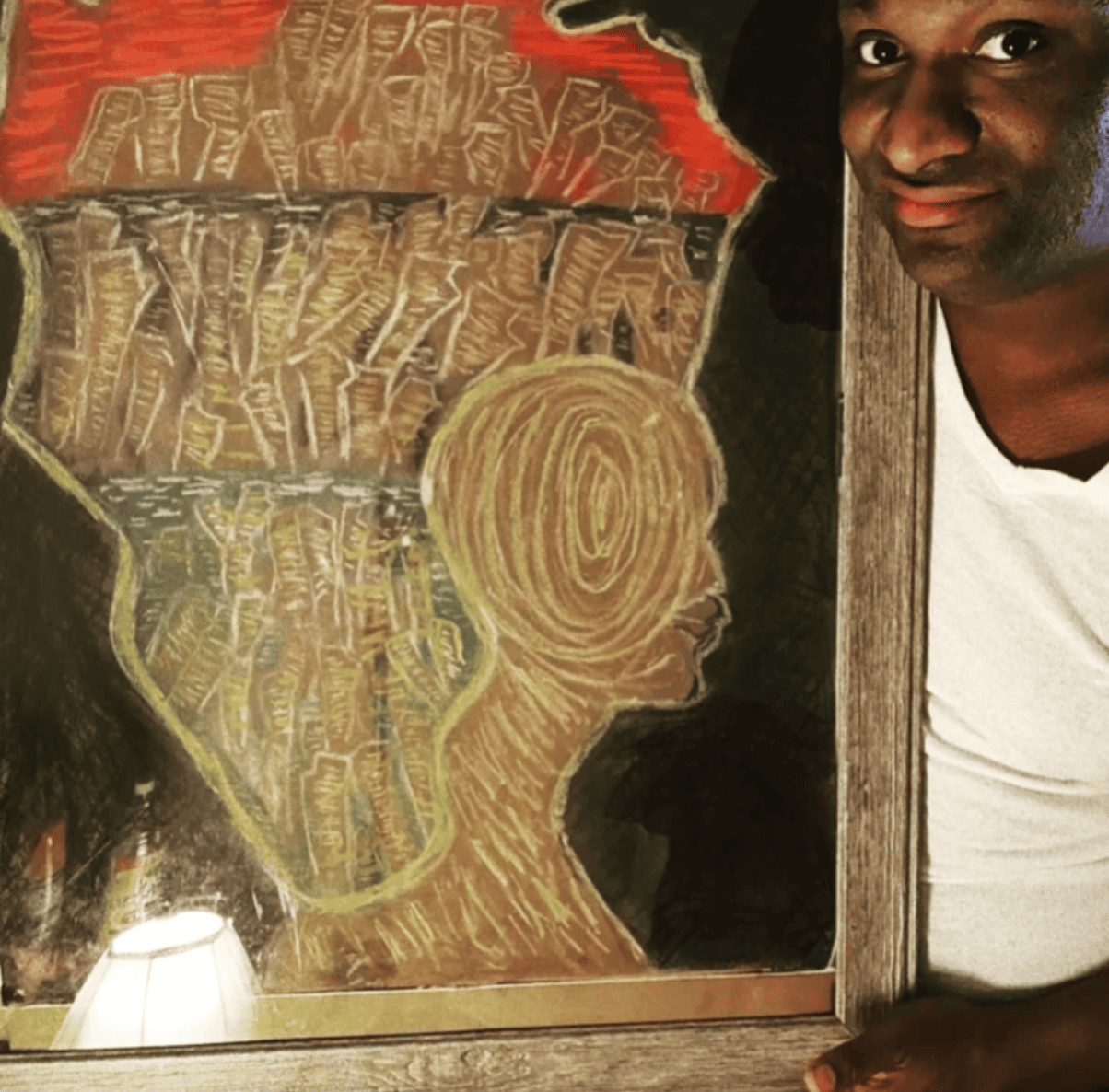
Denard Burney is an artist who uses the expressive power of charcoal and pastels to explore emotion, identity, personal experience, and imagination. His work emerges from a deeply personal place, where feelings that can be difficult to express through words find another language on canvas. For Burney, art becomes a way to transform both joy and pain into something visible, meaningful, and enduring.
Describing his creative approach, Burney explains that he specializes in expressing his heart on canvas. His paintings are shaped by what he describes as “joy filled pain,” a phrase that captures the emotional contrast at the center of his artistic practice. Rather than separating happiness from hardship, his work allows both experiences to exist together. Personal memories, emotions, imagination, and cultural heritage become part of a visual conversation that invites viewers to look beyond the surface of the painting.
Among his works, Generativity offers a particularly meaningful exploration of heritage and identity. The painting reflects Burney’s desire to speak about his African heritage while considering what identity means both individually and collectively. Through its imagery, symbolism, and vibrant use of color, the work becomes a reflection on ancestry, birth, struggle, endurance, and the importance of remembering where we come from.
Finding Expression Through Charcoal and Pastels
Burney’s choice of charcoal and pastels provides him with two versatile mediums through which he can explore emotion. Charcoal can create powerful contrasts, textured surfaces, and expressive marks, while pastels allow for a more vibrant and atmospheric approach to color. Together, these mediums give Burney the ability to move between darker emotional themes and moments of brightness.
This balance is important to his work. His paintings are not simply about pain, nor are they solely expressions of joy. Instead, they exist in the space between the two. Life can contain struggle alongside hope, memory alongside imagination, and hardship alongside beauty. Burney brings these contradictions onto the canvas, allowing his artistic process to become an emotional form of storytelling.
His inspiration comes from personal experiences as well as his imagination. This combination gives his work room to move beyond literal autobiography. While individual experiences may provide the starting point, imagination allows Burney to reinterpret those experiences and connect them with broader themes that other people can recognize in their own lives.
Exploring African Heritage Through Generativity
In Generativity, Burney turns his attention directly toward his African heritage. The painting was inspired by his desire to discuss identity and to consider what it means to belong to a people and a shared history.
The work presents identity as something that is simultaneously personal and collective. It is not simply about one individual. Instead, Burney considers identity as something connected to ancestry, family, birth, history, and the experiences of those who came before us.
The symbolism within the painting reinforces this idea. Burney explains that the fingerprints on the woman represent birth and identity. A fingerprint is unique to every individual, making it a natural symbol for personal identity. At the same time, fingerprints can also suggest the traces that people leave behind. In this context, they become part of a larger reflection on where identity begins and how it is carried forward from one generation to another.
The imagery therefore connects the individual with something larger. Birth represents a beginning, while identity connects that beginning to a person’s history and sense of belonging. Through this symbolism, Generativity asks viewers to consider the many forces that shape who we become.
Remembering the Struggles of Ancestors
Another significant element of Generativity is the use of hands. For Burney, the hands represent the pain and struggle experienced by his ancestors.
Hands carry powerful associations. They create, build, work, protect, nurture, and endure. They can represent labor and sacrifice, but they can also symbolize connection between generations. By incorporating hands into Generativity, Burney brings attention to the experiences of those whose struggles helped shape the lives of generations that followed.
The painting consequently becomes more than a personal statement. It serves as a visual acknowledgment of ancestral experience. The pain represented in the work is not presented simply as something to dwell upon, but as part of a history that deserves to be remembered.
For Burney, remembering is important because identity cannot be fully separated from history. Understanding where we come from can influence how we understand ourselves in the present. Generativity creates space for that reflection, encouraging viewers to think about the sacrifices, challenges, and experiences that can become part of a family’s or community’s collective identity.
Vibrant Color as a Symbol of Endurance
While the painting addresses difficult themes, its vibrancy prevents the work from becoming defined only by pain. Burney deliberately uses vibrant color as a reminder of endurance.
The brightness within the painting represents the ability to survive and continue despite hardship. In this sense, color becomes symbolic rather than merely decorative. It communicates resilience and reinforces the idea that a history of struggle can also be a history of strength.
Burney describes the vibrancy of the color as a reminder that “we have endured” and that we should never forget where we come from. This idea sits at the heart of Generativity. The work acknowledges suffering while refusing to allow suffering to become the only definition of the people and heritage it represents.
There is therefore a sense of affirmation within the painting. The past may contain pain, but it also contains survival, continuity, and identity. The vibrant colors help express that complexity, giving the work an emotional energy that complements its deeper subject matter.
Art as a Connection Between Past and Present
At the center of Denard Burney’s artistic practice is a desire to express what exists within him. His work demonstrates how art can provide a space where personal experiences and larger cultural questions meet.
Generativity is particularly significant because it brings together several of the ideas that define Burney’s approach: personal expression, imagination, heritage, identity, pain, and hope. Through its fingerprints, hands, and vibrant colors, the painting connects individual identity with ancestral history and collective experience.
Rather than presenting heritage as something distant or purely historical, Burney makes it emotionally immediate. The work reminds viewers that the past continues to influence the present, and that remembering one’s origins can be an important part of understanding one’s identity.
For Burney, the canvas becomes a place where these ideas can coexist. Charcoal and pastels become tools for translating emotion into visual form, while symbolism gives his experiences a broader meaning. His paintings invite viewers not only to observe, but also to consider their own histories, identities, and connections to the people who came before them.
Through his art, Denard Burney demonstrates that pain and joy do not have to exist separately. They can become intertwined within the same story, the same identity, and the same work of art. In Generativity, that story becomes a reflection on African heritage, ancestral struggle, resilience, and the importance of remembering where we come from.

