


Adamo Macri is a Montreal-based multidisciplinary artist whose work challenges conventional ways of seeing both ourselves and the world around us. Working across sculpture, photography, painting, video, and drawing, Macri creates immersive visual narratives that investigate identity, transformation, contamination, and humanity’s evolving relationship with nature. Rather than producing isolated artworks, he approaches each project as part of an ongoing anthology of interconnected stories, where every piece contributes to a larger exploration of human experience.
A defining aspect of Macri’s artistic practice is his willingness to blur the boundaries between creator and creation. His own body frequently becomes part of the artwork, serving as both subject and medium through which complex ideas unfold. This physical transformation is not merely performative but deeply conceptual, allowing him to examine how identity is shaped by external forces, environmental influences, and psychological perceptions. Through this innovative approach, Macri encourages viewers to question what they believe they know while confronting the unseen systems that shape everyday thought.
A Multidisciplinary Practice Rooted in Transformation
Macri’s work resists categorization. Sculpture, photography, video, painting, and drawing are not separate disciplines within his practice but interconnected languages that support one another. His sculptures often extend beyond static objects, becoming evolving events that change through context, interpretation, and the viewer’s participation.
This fluidity reflects one of the artist’s central concerns: transformation. Whether examining physical metamorphosis, environmental contamination, or shifting identities, Macri explores how nothing remains fixed. Human beings, landscapes, and even ideas exist in continuous states of change.
Rather than offering straightforward narratives, his artworks invite audiences into layered visual experiences where symbolism, materiality, and emotion intersect. Every project becomes an opportunity to question assumptions about the natural world, the human body, and the cultural beliefs that quietly influence perception.
Bias: A Meditation on Nature and Perception
One of Macri’s most compelling works, Bias, exemplifies his ability to transform familiar materials into profound psychological landscapes.
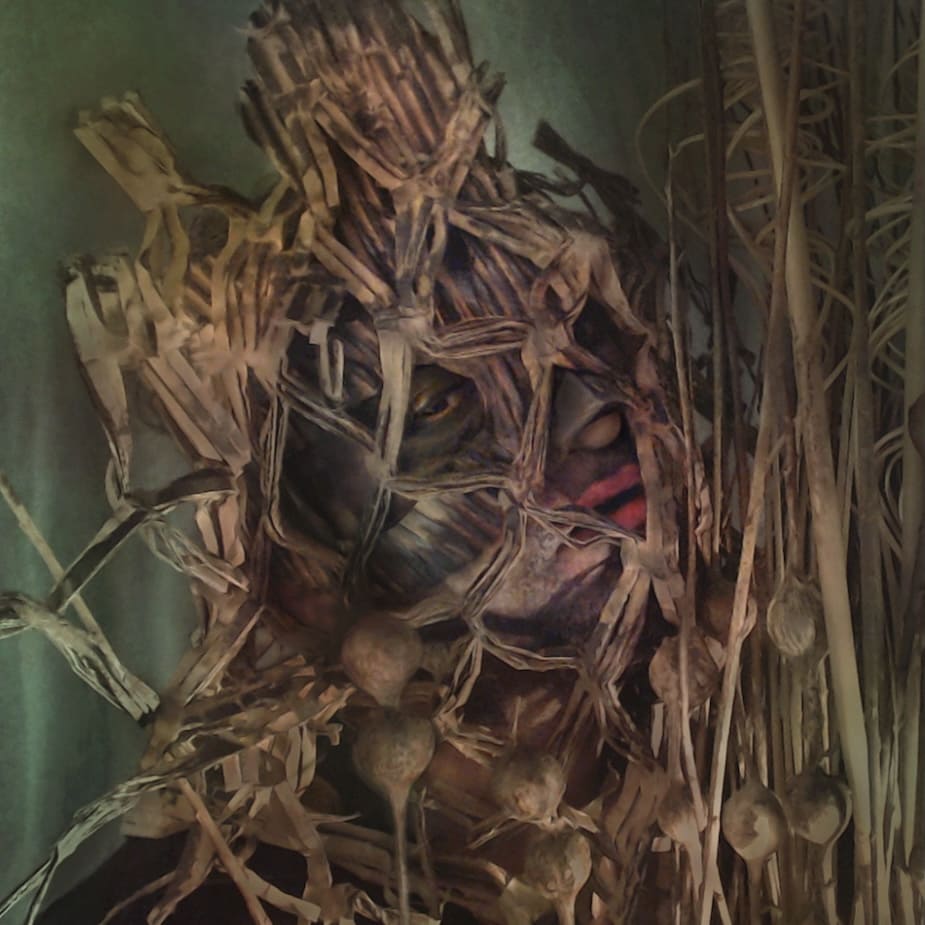
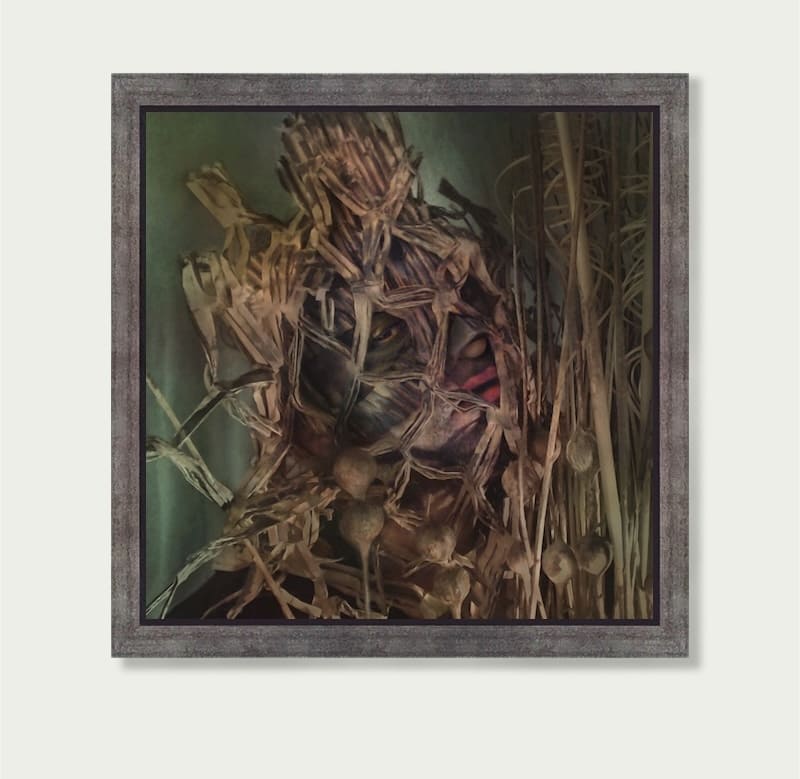
The composition presents a dark, nearly indistinguishable figure almost entirely consumed by an intricate network of dried wild plants. The human form is difficult to identify with certainty, existing somewhere between person, creature, and hybrid organism. The viewer’s attention immediately settles on the head, pressed deeply into tangled vegetation that appears to have held its captive for an immeasurable length of time.
Diagonal strands of brittle plant fibers weave across the image like an elaborate net. Their arrangement subtly recalls fabric cut “on the bias,” where diagonal threads alter the way cloth drapes across the body. In Macri’s interpretation, however, these organic fibers do not provide comfort or elegance. Instead, they cling to the figure like an involuntary garment of confinement, transforming nature itself into an instrument of entrapment.
Beauty That Conceals Unease
The restrained color palette strengthens the emotional atmosphere of Bias. Deep greens, muted browns, and faded beige tones create an environment that feels ancient, weathered, and unmistakably organic. The visual language evokes dried grasses, forest remnants, and natural decay.
Against these subdued earth tones emerges one startling detail: a pair of vivid red lips.
Only partially visible beneath the vegetation, the lips introduce the painting’s strongest emotional note. Slightly parted, they suggest a suspended breath, silent fear, or an unfinished plea. Their saturated color becomes the focal point of the composition, simultaneously representing life, vulnerability, temptation, and danger.
This singular accent transforms the emotional reading of the work. Is the figure trapped by nature, or perfectly camouflaged within it? Is it predator or prey? Macri deliberately refuses a definitive answer, allowing uncertainty itself to become part of the artwork’s meaning.
Unpacking the Many Meanings of Bias
The title Bias functions on multiple conceptual levels.
In everyday language, bias refers to prejudice or a tendency toward particular beliefs. In statistics, it describes systematic distortions that influence outcomes. In textile design, fabric cut on the bias follows diagonal threads, changing the material’s flexibility and movement.
Macri weaves these definitions together into one visual statement.
The lattice of dried plants literally resembles a bias-cut textile while symbolically representing the invisible assumptions that shape human thinking. The figure becomes wrapped not only in vegetation but also in inherited beliefs, cultural narratives, and psychological frameworks.
The artwork asks viewers to consider how perception itself can become entangled within structures that feel entirely natural but quietly distort reality.
Challenging the Myth of the “Natural”
One of the most thought-provoking aspects of Bias is its examination of what psychologists describe as the “naturalness bias” the widespread belief that natural things are automatically healthier, safer, or morally superior to synthetic alternatives.
Every visible element within the image appears organic. The dried grasses, woven fibers, and earthy textures evoke simplicity, purity, and authenticity.
Yet nothing in the composition feels protective.
Instead, nature becomes oppressive. The vegetation suffocates rather than shelters. What initially appears peaceful gradually reveals itself as restrictive, even threatening. The plants resemble both ancient burial wrappings and the grasp of a carnivorous organism, suggesting that beauty and danger often coexist within the same environment.
Macri uses this unsettling contradiction to expose how easily romanticized ideas about nature can obscure its complexities. The work encourages viewers to reconsider assumptions that equate the natural with the harmless while acknowledging that both natural and human-made systems possess the capacity for creation and destruction.
The Language of Material and Metaphor
The dried vegetation carries additional symbolic weight through its relationship to textiles.
Before becoming thread or cloth, plant fibers exist as raw organic material. In Bias, these fibers never undergo refinement. Instead of being woven into garments chosen by the wearer, they attach directly to the body, creating an unwanted cloak imposed by circumstance.
This transformation suggests that many of humanity’s deepest biases operate similarly.
Rather than consciously selecting our beliefs, we inherit them through culture, upbringing, environment, and repeated experience. Like invisible garments, these assumptions shape perception long before we recognize they exist.
Macri’s imagery invites reflection on how these inherited patterns influence everything from personal identity to cultural attitudes toward nature, science, and society itself.
Time, Contamination, and Stillness
Another remarkable quality of Bias is its powerful sense of time.
The figure appears frozen within the vegetation, suggesting not a sudden capture but a gradual process of encasement. Layers of dried plants imply years of accumulation, echoing how bias develops slowly through repeated exposure rather than isolated moments.
This temporal dimension aligns closely with recurring themes throughout Macri’s broader practice. Contamination, for him, extends beyond physical substances to include ideas, beliefs, memories, and visual imagery. Just as pollen spreads invisibly across landscapes, assumptions quietly attach themselves to human consciousness, influencing thought without immediate awareness.
The artwork therefore becomes less about an individual trapped in nature than about the systems that slowly immobilize perception itself.
Art That Invites Reflection
Throughout his multidisciplinary career, Adamo Macri has consistently challenged audiences to examine the hidden relationships between body, environment, identity, and belief. His works do not provide easy conclusions or moral certainties. Instead, they create spaces where ambiguity becomes intellectually productive.
Bias embodies this philosophy with remarkable precision. Its organic beauty attracts the viewer before gradually revealing deeper tensions surrounding perception, environmental ideals, inherited assumptions, and psychological entrapment. The work succeeds because it does more than illustrate the concept of bias; it allows viewers to experience it firsthand.
By combining meticulous visual construction with rich conceptual depth, Macri demonstrates how contemporary art can simultaneously engage the senses and provoke critical reflection. His multidisciplinary practice continues to expand conversations about transformation, contamination, and identity, reminding us that the most powerful works of art often reveal the invisible forces shaping how we understand ourselves and the world around us.
In Bias, those invisible forces become tangible. The beautiful web of dried vegetation serves as both a visual masterpiece and a philosophical metaphor, challenging us to recognize the elegant traps we inherit, the comforting narratives we embrace, and the unseen structures that quietly guide our perception long before we realize we are caught within them.

