


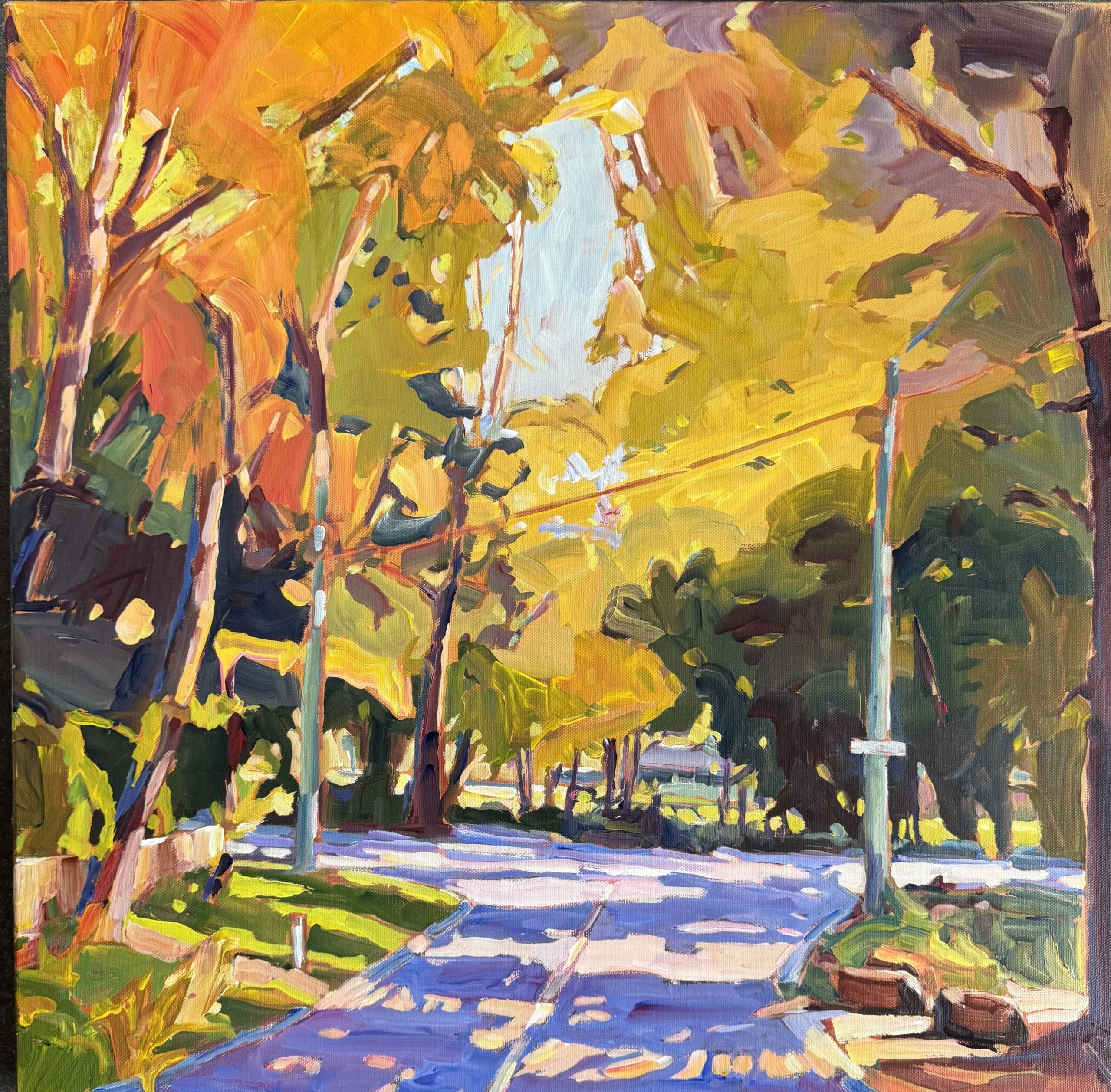
Jennifer Reimer is an artist whose practice is defined by the expressive use of strong, bold colour and a deep fascination with the way light interacts with the world around us. Her paintings often explore the beauty and atmosphere of landscapes, particularly those found in Western Australia. Through confident brushwork and vibrant palettes, she transforms familiar scenes into evocative visual experiences that invite viewers to see everyday environments in new and imaginative ways.
While Reimer enjoys working across a variety of subjects, including still life and life drawing, landscape remains the primary focus of her artistic exploration. Her work reflects a thoughtful engagement with place, capturing not only the visual characteristics of a location but also the feeling of space, time, and atmosphere that defines it. By balancing observation with artistic interpretation, she creates paintings that are both grounded in reality and open to personal reflection.
The Power of Bold Colour
One of the most distinctive aspects of Jennifer Reimer’s work is her confident use of bold and expressive colour. Rather than limiting herself to strictly naturalistic tones, she often embraces vibrant, idealised colour palettes that heighten the emotional and atmospheric qualities of a scene. These colours bring energy to her compositions and help communicate the changing moods of a landscape.
Colour in Reimer’s paintings functions as a key structural element. It shapes the viewer’s experience of depth, light, and movement within the composition. Bright areas draw attention and suggest sunlight, while darker tones create shadows and contrast that define the forms within the scene. This careful balance between light and dark allows her landscapes to feel dynamic and alive.
Her fascination with the interaction of light on a subject plays an important role in the development of each painting. Light is not simply an element within the landscape but a driving force that influences colour, atmosphere, and spatial perception. By observing how light moves through trees, across hills, and over open spaces, Reimer captures moments that feel both immediate and timeless.
A Strong Connection to Landscape
Landscape painting has a long tradition in art history, but Jennifer Reimer approaches the genre with a contemporary perspective that blends observation with personal expression. The landscapes she paints are often drawn from Western Australia, a region known for its distinctive vegetation, dramatic light, and varied terrain.
These environments offer a rich visual language for her work. The interplay of foliage, sky, and natural forms creates opportunities to explore colour relationships and compositional structure. Rather than simply documenting these landscapes, Reimer seeks to convey the feeling of being present within them.
Many of the locations she paints are well known to local audiences. By depicting familiar places, she creates an immediate sense of recognition and connection. However, her expressive brushwork and colour choices ensure that the paintings remain interpretive rather than strictly descriptive. The result is a body of work that celebrates both the identity of a place and the personal perspective of the artist.
Expressive and Economical Brushwork
Another defining characteristic of Jennifer Reimer’s practice is her use of expressive and economical brushstrokes. She avoids excessive detail, instead relying on confident gestures of paint to suggest form, texture, and movement. This approach allows the surface of the painting to remain lively and energetic.
Economy in brushwork means that each mark carries purpose. A single stroke may indicate the structure of a tree, the movement of foliage, or the depth of a shadowed path. By simplifying forms in this way, Reimer maintains a balance between representation and abstraction.
This technique also encourages viewers to participate in the experience of the painting. Because the imagery is not overly detailed, the viewer’s imagination plays a role in completing the scene. The painting becomes a shared space where observation and interpretation meet.
The expressive quality of her brushwork reinforces the emotional presence of the landscape. Rather than appearing static or distant, the scenes feel immediate and immersive, as though the viewer has stepped directly into the environment being depicted.
Painting a Familiar Place: The Bottom of Hillsden Road
An excellent example of Jennifer Reimer’s landscape practice can be seen in her painting The Bottom of Hillsden Road, an acrylic on canvas work measuring 60 by 60 centimeters. The painting portrays a familiar location in the village of Darlington in the Perth Hills of Western Australia.
In this composition, Reimer uses strong vertical elements to structure the scene. Trees and dense foliage rise through the canvas, creating layers that lead the viewer’s eye deeper into the landscape. These vertical forms act as visual pathways, guiding attention through the shadows and greenery toward the open light beyond.
The use of bold colour plays an important role in shaping the atmosphere of the painting. Rich greens and deep shadowed tones contrast with lighter areas that suggest sunlight filtering through the landscape. This contrast between darkness and brightness creates depth while reinforcing the artist’s interest in how light transforms a scene.
As the viewer’s gaze moves through the painting, the composition gradually opens toward a light filled space on the other side of the foliage. This transition from shadow to light creates a sense of movement and discovery, echoing the experience of walking through a wooded area toward an open clearing.
The painting captures not only the physical characteristics of the location but also the sensory experience of the environment. It reflects the quiet familiarity of a well known place while allowing space for personal interpretation.
Creating Connections Through Art
Jennifer Reimer’s landscapes do more than represent physical locations. They create connections between people, memory, and environment. For viewers who know the places she paints, her work can evoke personal experiences and shared community identity.
At the same time, her paintings remain accessible to audiences who may never have visited Western Australia. The expressive colour, balanced compositions, and emphasis on light create universal visual experiences that transcend geography.
Her ability to combine recognizable landscapes with an interpretive artistic language ensures that each painting carries both specificity and openness. The viewer is invited to explore the painting, discovering their own sense of meaning within the scene.
Continuing Exploration of Landscape
Jennifer Reimer continues to explore the possibilities of landscape painting through her distinctive approach to colour, light, and brushwork. Her work demonstrates how familiar environments can be transformed through artistic interpretation, revealing new layers of beauty and atmosphere.
By focusing on the interaction of paint, light, and place, she creates landscapes that feel vibrant and alive. Each composition reflects both careful observation and a personal connection to the natural world.
Through paintings such as The Bottom of Hillsden Road, Reimer reminds us that landscapes are more than physical spaces. They are environments filled with memory, light, and emotion. Her art invites viewers to pause, look more closely, and rediscover the richness of the world that surrounds them.

