


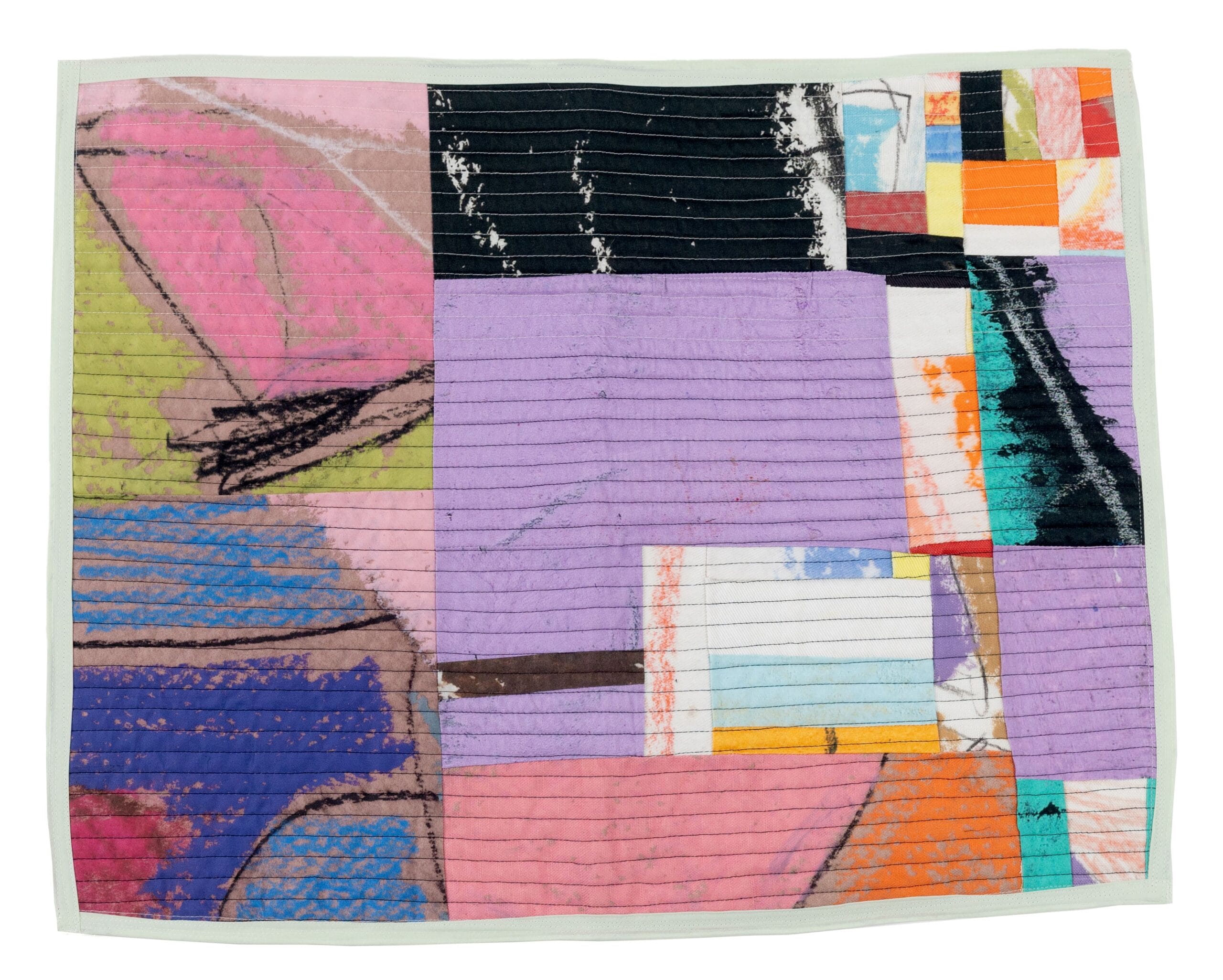
Julian Jamaal Jones is a multidisciplinary artist whose work explores the intersection of abstraction, memory, and cultural inheritance. Working across textiles, quilting, works on paper, and installation, Jones creates visually layered compositions that transform emotional experiences into tactile forms. His art invites viewers to engage with color, pattern, and mark-making as a language capable of conveying deeply personal and cultural narratives.
Rooted in both intuition and tradition, Jones’ practice reflects a thoughtful dialogue between contemporary abstraction and the visual history of Black textile traditions. By combining the expressive qualities of drawing with the structural possibilities of quilting, he creates works that function simultaneously as visual compositions and as encoded stories.
Artistic Background and Formation
Julian Jamaal Jones developed his artistic voice through formal education and sustained creative exploration. He earned his Bachelor of Fine Arts from the Herron School of Art and Design, an institution known for nurturing experimental approaches to contemporary art. Later, he continued his studies at the Cranbrook Academy of Art, where he received his Master of Fine Arts.
These formative experiences helped shape his approach to materials and concepts. At Cranbrook in particular, Jones deepened his engagement with textile-based practices and the possibilities of abstraction. The environment encouraged artists to explore interdisciplinary methods, which aligned naturally with Jones’ interest in working across mediums such as quilting, drawing, and installation.
Today, Jones lives and works in Indianapolis, Indiana, where he continues to expand his visual language through a practice grounded in experimentation, cultural reflection, and personal storytelling.
Abstraction as a Language of Memory
At the core of Jones’ work lies a fascination with abstraction as a storytelling device. Rather than depicting literal scenes or narratives, he uses color, pattern, and gestural marks to evoke emotional landscapes and fragments of memory. His compositions often feel intuitive, yet they are carefully constructed through layering and repetition.
This approach reflects his belief that abstraction can operate as a coded visual language. Through subtle visual cues such as repeated patterns, stitched structures, and drawn gestures, his works communicate experiences that may not be easily expressed through words. These elements combine to create pieces that feel both personal and universal.
The use of quilting is particularly significant within his practice. Historically, quilts have served not only as functional objects but also as carriers of memory, tradition, and identity. Jones embraces this legacy while expanding it into contemporary abstraction, transforming the quilt into a surface for experimentation and emotional expression.
Influence of Music and Personal History
Music plays a vital role in shaping the rhythm and atmosphere of Jones’ work. Just as a piece of music unfolds through tempo, tone, and repetition, his visual compositions develop through layered structures and color relationships.
This influence often begins with intuitive sketches. Jones listens to music and allows its emotional resonance to guide his mark-making process. These early drawings become the foundation for later textile pieces, where fabric, stitching, and quilting translate the initial gestures into physical form.
His personal history and cultural background also inform this process. The visual language of Black textile traditions, known for bold patterns, improvisational structures, and rich symbolism, provides both inspiration and context. By referencing these traditions within a contemporary framework, Jones honors cultural heritage while simultaneously pushing the boundaries of textile-based abstraction.
The Material Language of Quilting
Quilting is central to Jones’ practice not only as a technique but also as a conceptual framework. The process of assembling fabric pieces mirrors the act of piecing together memories and experiences. Each layer contributes to a larger composition that is both structured and fluid.
Fabric allows for an interplay between softness and structure. Through stitching and quilting lines, Jones introduces rhythm and movement across the surface of his works. These lines guide the viewer’s eye, creating subtle pathways through fields of color and pattern.
Additionally, the tactile quality of textiles enhances the sensory experience of the work. Unlike purely painted surfaces, quilted compositions possess depth and physical presence. The textures created by layered fabrics and stitching invite viewers to imagine touch, adding another dimension to the emotional resonance of the piece.
AGAPE (Nicholas Britell): Translating Sound Into Color
One notable work that exemplifies Jones’ approach is AGAPE (Nicholas Britell). In this piece, the artist transforms the emotional qualities of music into a textile composition built from layered colors, drawn marks, and structured quilting.
The artwork features intersecting blocks of lavender, pink, teal, and black. These colors interact in ways that suggest shifting moods and moments of reflection. Rather than forming rigid geometric divisions, the shapes appear to overlap and merge, creating a sense of movement across the surface.
Gestural drawn marks appear throughout the composition, adding a spontaneous quality to the piece. These marks resemble fragments of thought or memory, echoing the way music can evoke fleeting emotional impressions.
A series of horizontal quilting lines runs across the work, unifying the various elements within a subtle rhythmic framework. These stitched lines function almost like the steady tempo of a musical composition, grounding the more expressive visual gestures.
Through this interplay of color, line, and textile structure, AGAPE (Nicholas Britell) becomes a meditation on tenderness and emotional resonance. The work captures the quiet intensity of feeling, moments that are reflective, intimate, and deeply human.
Recognition and Institutional Collections
Jones’ innovative approach to textile abstraction has gained recognition both nationally and internationally. His work has been exhibited in numerous galleries and institutions, allowing a wide audience to engage with his evolving visual language.
In addition to exhibitions, his artworks have entered several respected institutional collections. These include the Cranbrook Art Museum, Purdue University, Wabash College, and the Richmond Art Museum. The inclusion of his work in these collections reflects the growing appreciation for contemporary textile practices and the conceptual depth of his artistic approach.
Such recognition highlights the relevance of Jones’ practice within broader conversations about contemporary art, identity, and material culture.
A Contemporary Voice in Textile Abstraction
Julian Jamaal Jones stands among a new generation of artists expanding the possibilities of textile-based art. By merging drawing, quilting, and installation, he creates works that blur the boundaries between traditional craft and contemporary abstraction.
His practice demonstrates how materials rooted in historical traditions can be reimagined to address present-day questions about memory, identity, and cultural inheritance. Through intuitive mark-making and carefully constructed compositions, Jones transforms personal and sonic experiences into visual environments rich with emotion and meaning.
As his work continues to evolve, it invites viewers to slow down and reflect on the subtle rhythms of color, pattern, and texture. In doing so, Julian Jamaal Jones offers a compelling vision of abstraction, one that speaks quietly yet powerfully through the language of fabric, memory, and sound.

