


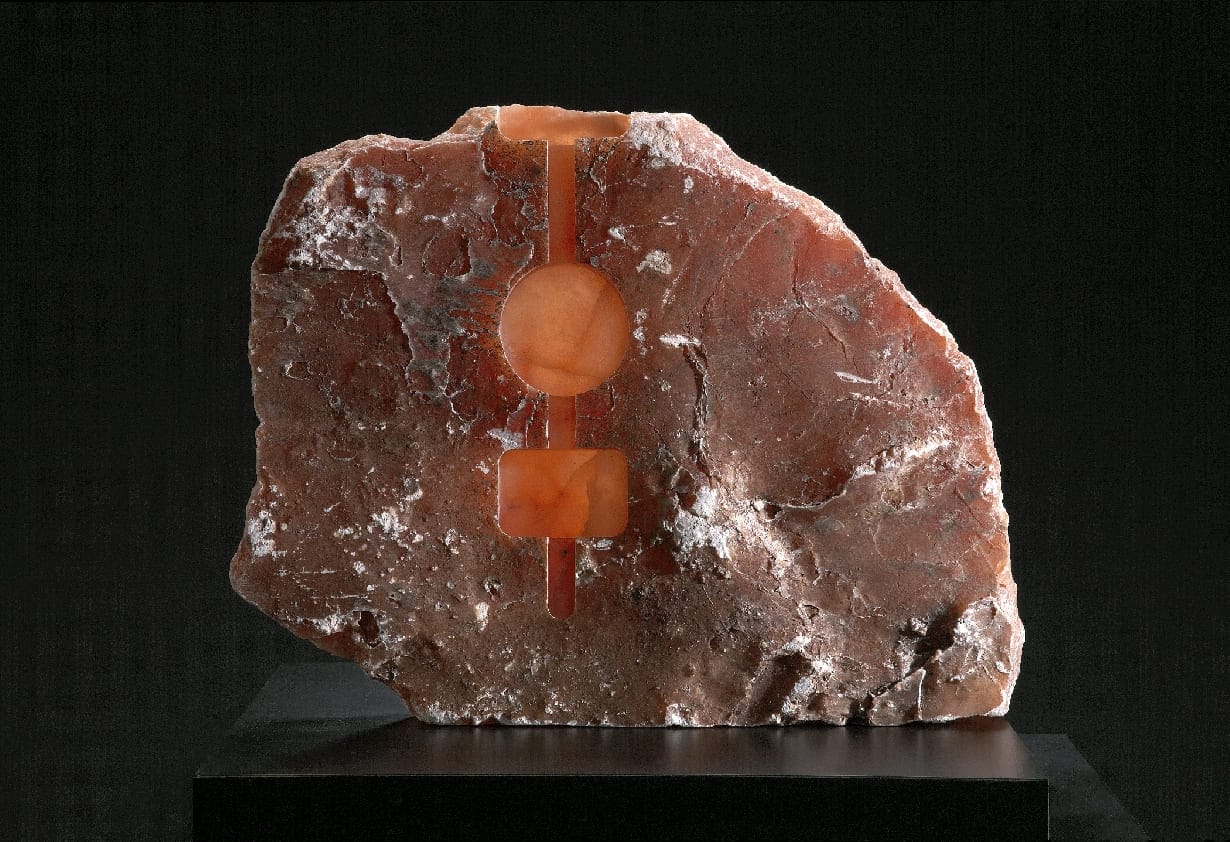
Derek Uhlman stands among those sculptors whose careers are built on both rigorous tradition and a deeply personal vision. As an American sculptor who apprenticed under the renowned Reuben Nakian, Uhlman’s artistic foundation was forged in an environment that valued discipline, craft, and philosophical engagement with form. Apprenticeship in sculpture is more than technical training; it is a passing down of ways of seeing. Under Nakian’s mentorship, Uhlman absorbed not only the physical skills of carving and shaping but also a respect for sculpture as a dialogue between material, idea, and time.
This early formation positioned Uhlman to think of sculpture as something more than static object-making. From the start, his works were oriented toward meaning, symbolism, and the relationship between humanity and the larger world. These concerns would later become central themes throughout his career.
A Landmark Beginning: Stone Flowers
A defining moment arrived in 1982 when Uhlman received his first major commission from the General Foods Corporation. The result was Stone Flowers, a monumental 37,000-pound marble sculpture. The scale alone announced the arrival of a serious sculptor, but the work’s significance went beyond size. Marble, historically associated with classical sculpture and permanence, became in Uhlman’s hands a medium for contemporary reflection.
Stone Flowers encapsulated tensions that would recur in his later works: delicacy expressed through massive material, natural motifs rendered in stone, and the suggestion that even the most solid forms can allude to fragility and change. A flower, by nature, is fleeting; in marble, it becomes paradoxically enduring. This interplay between the temporary and the eternal is one of Uhlman’s core artistic concerns.
The commission also demonstrated the trust that major institutions placed in his vision. Large-scale corporate commissions often demand both aesthetic impact and conceptual clarity, and Uhlman proved capable of delivering both.
Sculpture in Public and Private Spaces
Over time, Uhlman’s sculptures found homes in both private collections and major institutional settings around the world. His works being acquired by high-profile corporate and cultural spaces speaks to their broad resonance. Sculpture in such environments functions differently than in a museum: it becomes part of daily life, part of the visual and psychological landscape people inhabit.
Uhlman’s presence in corporate headquarters and prominent centers indicates that his sculptures communicate across audiences. They do not rely on obscure references or insider knowledge. Instead, they operate through universally legible themes nature, time, human presence, and transformation. Collectors and institutions alike are drawn to works that sustain meaning over years, even decades, and Uhlman’s focus on enduring themes makes his sculpture particularly suited to this role.
Exhibitions and Institutional Recognition
Exhibiting at respected institutions marked another important dimension of Uhlman’s career. Showing work in established venues situates an artist within broader art-historical conversations. It places their practice in dialogue with past and present sculptural traditions.
For Uhlman, exhibitions were not simply about visibility but about context. Sculpture changes depending on where it is seen: a gallery invites close inspection, a museum suggests historical continuity, and a sculpture center highlights material and process. Across these contexts, Uhlman’s work consistently engages viewers in reflection rather than mere observation.
Institutional recognition also underscores the seriousness of his practice. It suggests that curators and critics alike find intellectual and aesthetic depth in his work depth that rewards sustained attention.
Themes: Time, Society, and Nature
Uhlman himself has articulated the conceptual backbone of his sculpture. He notes that his works comment on the passage of time and on the complex relationship between man, society, and the natural world. These are expansive themes, but in sculpture they become tangible.
Time, in Uhlman’s work, is not just a subject but a collaborator. Materials age, surfaces weather, and forms endure. A sculpture exists in real time and changes with it. By choosing durable materials and archetypal forms, Uhlman invites viewers to think about their own position within longer timelines geological, historical, and cultural.
His engagement with nature is equally layered. Rather than simply depicting natural forms, he often translates their principles into sculptural language. Growth, erosion, balance, and tension all appear as structural ideas. The natural world is not a backdrop but a system to which humanity belongs.
Opposing Forces as Creative Energy
A particularly compelling aspect of Uhlman’s philosophy is his interest in “opposing forces.” He speaks of creation and destruction, antiquity and modernity, the universal and the personal. These are not contradictions to be resolved but dynamics to be held in balance.
Creation and destruction, for instance, are inherent to sculpture itself. Carving stone requires removing material; forming a shape involves erasing another. Uhlman’s awareness of this duality gives his work conceptual depth. Every finished sculpture carries the memory of what was cut away.
Similarly, antiquity and modernity meet in his choice of materials and themes. Marble and stone evoke ancient traditions, while his conceptual framing speaks to contemporary concerns about society and environment. The universal and the personal intersect when viewers bring their own experiences to forms that feel both symbolic and intimate.
Material, Weight, and Meaning
One cannot discuss Uhlman without addressing materiality. The physical weight of his sculptures is not incidental; it is part of their meaning. Heavy materials ground the work in reality; they resist easy movement and quick consumption. In a fast-paced world, such solidity can feel almost radical.
Weight also creates presence. A massive sculpture commands space and attention. It asks viewers to slow down, to walk around it, to feel its scale in relation to their own bodies. This bodily awareness is central to sculptural experience and aligns with Uhlman’s interest in humanity’s place in the world.
A Lasting Contribution
Derek Uhlman’s career reflects a sustained commitment to sculpture as a meaningful art form. From his early apprenticeship to major commissions and international placements, his path shows both artistic seriousness and public relevance. He has navigated the space between fine art and public art, between personal expression and shared symbolism.
His focus on time, nature, and opposing forces ensures that his work does not become dated. These themes remain perennially relevant because they are woven into human existence itself. As long as people reflect on their relationship to the world and to history, Uhlman’s sculptures will have something to say.
Conclusion: Sculpture as Dialogue Across Time
Ultimately, Derek Uhlman’s sculpture can be understood as a dialogue between past and present, material and idea, humanity and nature. His works do not shout; they endure. They ask quiet but profound questions about where we stand in the flow of time and how we relate to the forces around us.
In an era when images are often fleeting and digital, Uhlman’s commitment to solid, lasting materials feels especially significant. His sculptures remind us that art can be both physically grounded and conceptually expansive. They stand as markers of thought, craft, and reflection, inviting each viewer to pause and consider the larger cycles of creation, change, and continuity that shape our lives.

