


Scott Wesley Jones was born in the 1950s in Waterloo, Iowa, and has spent a lifetime moving between the roles of artist, educator, and philosophical observer. His work is shaped not by spectacle or self-promotion, but by a deep commitment to inquiry, reflection, and wonder. Through decades of teaching and painting, Jones has developed an artistic practice that resists declaration and instead invites shared perception, asking viewers to stand beside him rather than in front of him.
Early Life and Academic Formation
Growing up in the American Midwest during a period of cultural and social change, Jones was exposed early to the quiet tension between structure and uncertainty that would later inform his work. He pursued higher education with a focus on both artistic practice and pedagogy, earning a Bachelor of Science degree in Art Education from the University of Northern Iowa in 1986. This foundation was further strengthened when he completed a Master’s Degree in Art Education at Northern Arizona University in 1994.
Rather than viewing education as separate from artistic creation, Jones embraced teaching as an extension of his creative inquiry. His academic training provided him with a strong grounding in visual language, art history, and critical thinking, reinforcing an approach to painting that values exploration over assertion.
A Career Rooted in Teaching
Jones dedicated more than three decades to education, most notably within the Crane Elementary School District in Yuma, Arizona, where he taught from 1988 until 2014. For nineteen years, he worked as an elementary art specialist, introducing students to creative thinking at its most foundational level. Later, he transitioned into teaching Language Arts for seven years, deepening his engagement with narrative, symbolism, and the structures through which meaning is constructed.
In addition to his work in elementary education, Jones taught painting and drawing at Arizona Western College from 1990 to 1996, returning again in 2016. He also taught art history at Arizona Western College between 2013 and 2016. These roles allowed him to engage directly with the historical and philosophical dimensions of art, reinforcing his belief that painting is part of a long continuum of human inquiry rather than an isolated act of self-expression.
Exhibition Practice and Artistic Presence
Since 1983, Scott Wesley Jones has exhibited his work in a range of juried group and solo exhibitions across Iowa, Arizona, and California. His exhibition history reflects steady commitment rather than rapid visibility, aligning with an artistic philosophy that values depth over immediacy. His paintings do not announce themselves loudly, but instead reward sustained attention, inviting viewers into a slower and more contemplative experience.
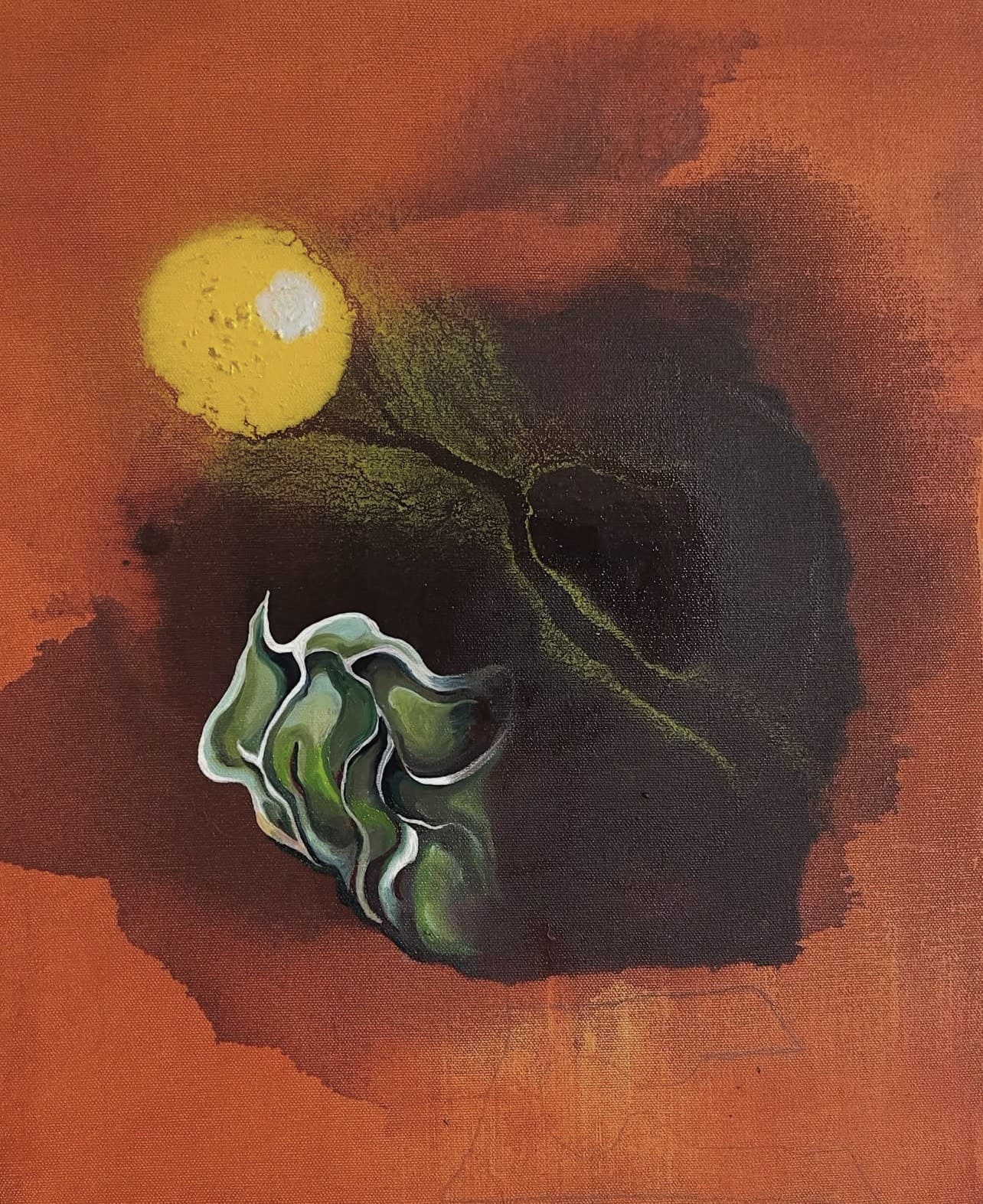
While his work is rooted in abstraction, it resists formal rigidity. Instead, it operates as a visual field in which perception, memory, and intuition interact. Jones’s paintings are not designed to explain or instruct, but to remain open, allowing each viewer to encounter them from their own position of awareness.
Painting as Exploration Rather Than Declaration
For Jones, painting is not about communicating what he already knows. It is about discovering what remains unknown. The act of painting becomes a process of exploration rather than a statement of intent. He does not approach the canvas with the goal of impressing meaning upon the viewer. Instead, he seeks to make his own sense of wonder visible and engaging.
This approach places the artist and the viewer on equal footing. Jones does not stand before the audience as an authority. He stands beside them, asking whether they perceive the world through a similar haze of uncertainty and curiosity. His paintings function as shared spaces where meaning is not delivered, but quietly negotiated.
Existential Thought and the Constructed Self
A significant philosophical influence on Jones’s work is Existentialism, particularly the idea that the self is not fixed, but constructed moment by moment. From the time we wake in the morning, we begin telling ourselves stories about who we are, where we are, and what matters. These narratives are assembled from memory, belief, responsibility, and habit, forming a sense of identity that feels stable but is often fragile.
Jones reflects on how easily these stories can unravel, particularly in the presence of Alzheimer’s disease or mental illness. Such experiences reveal how thinly constructed identity can be, and how dependent it is on continuity of memory and narrative. This understanding has led him to question whether the self, as a subject, is inherently compelling enough to sustain meaningful art.
Moving Beyond Identity in Painting
Because the self is a mental construction that sits close to the surface, Jones expresses doubt about its lasting interest as artistic content. For him, a successful painting connects to something beyond personal identity or expressive posture. Rather than functioning as self-expression, painting becomes another type of construction, one that operates outside the boundaries of the ego.
When his painting is working well, Jones describes himself as being out of the way. In these moments, the work seems guided by a body of knowledge that exists beyond him. This surrender of control allows the painting to access deeper currents of meaning, unbound from personal narrative or intention.
Mythology and Collective Memory
Through years of practice, Jones has come to believe that mythology is one of the few constants within the human psyche. Unlike individual identity, mythology persists across cultures and time, speaking through symbols, archetypes, and shared patterns of experience. His paintings do not illustrate specific myths, but they resonate with mythological presence, suggesting forces that are universal rather than personal.
In this way, his work aligns with a tradition of art that seeks connection with collective memory rather than individual biography. Painting becomes a site where something ancient and communal attempts to surface, reminding viewers of shared human experiences that exist beneath constructed identities.
An Invitation to Wonder
At the heart of Scott Wesley Jones’s practice is an invitation to wonder. His paintings do not resolve questions or offer conclusions. Instead, they hold space for uncertainty, encouraging viewers to step away from rigid narratives and into a more open state of perception.
In a contemporary art landscape often driven by immediacy, branding, and assertion, Jones’s work offers a quieter alternative. Rooted in decades of teaching, philosophical reflection, and sustained practice, his paintings affirm that art does not need to declare meaning to be meaningful. Sometimes, standing together in shared curiosity is enough.

