


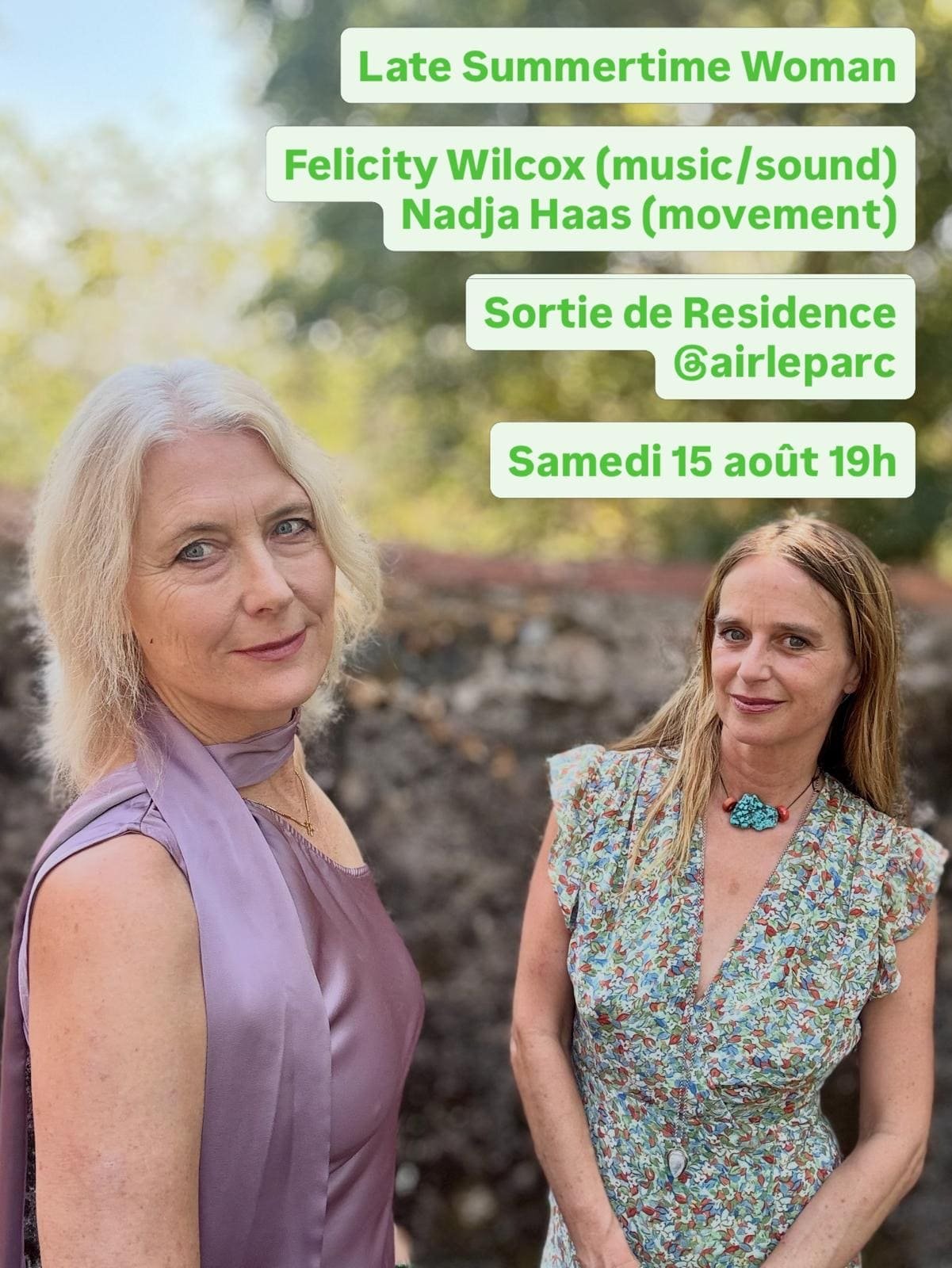
A Berlin-based artist’s practice spans painting, textiles, sound and choreography, and her next two years take her from Venice to the Kerry coast to the deck of a 1920s riverboat
Nadja Haas doesn’t work in one medium so much as she works in relationships between them. Over the past several years the Berlin-based artist has moved between performance, movement, installation, drawing, writing, textiles, sound and video, often within a single project. What holds it together is a methodology she calls Listening Movement, built from years of research into somatic awareness, attentive listening and collaborative composition. In her hands, landscape and elemental forces do real work in a piece. Water, wind, sound, light, architecture and material function as active participants, and performance ends up operating as artwork, research and encounter all at once.
Haas trained across disciplines rather than settling into one: an MA in Fine Art from the Slade School, a BA in Fine Art from Kingston University, a diploma in dance and choreography from Holborn Performing Arts Centre, a foundation year in painting and drawing at Byam Shaw. That cross-training shows in the range of her output, from an AR installation built around pyramids and gravity to a durational performance about migration staged in Venice. But two projects now anchor her attention through 2026 and 2027: Late Summertime Woman, developed with composer Dr. Felicity Wilcox, and THE RIVERING, a months-long journey by tugboat from the Rhine to the Mediterranean and back to Berlin.
Late Summertime Woman: A Body Returning to Itself
Late Summertime Woman, an ongoing collaboration between Haas and Sydney-based composer and sound artist Dr. Felicity Wilcox, has been in development since 2025 and continues through 2027, staged partly in County Kerry, Ireland, and partly in Pampelonne. It’s a performance and video project built around transformation, embodiment, female experience, sound and ecological connection, with particular attention to mid-to-late womanhood and the passage through menopause.
The Kerry coastline shapes the choreography as much as it surrounds it. The piece asks what a female body finds when it lets go of decades organized around fertility, productivity and social expectation and returns instead to its own instincts and rhythms. Haas’s solo choreography carries that question through movement rather than argument, set against Wilcox’s soundscape.
Wilcox draws on her Irish-Australian heritage and diasporic memory, building her compositions from field recordings gathered on the Kerry coast and from the strange, cold light given off by bioluminescent sea life. The result moves somewhere between elegy and dawn chorus. The project takes two forms: a 20-minute fixed media work of video and stereo sound, and a 50-minute live performance combining Haas’s solo dance with live and recorded sound, digital projections, prepared piano, Irish flute, fiddle and bodhrán. It’s presented through dock11 Berlin, one of the city’s central venues for contemporary dance, and continues Haas’s long working relationship with that space.
A Practice Built on Listening
What makes Late Summertime Woman characteristic of Haas’s wider practice is the method underneath it. Listening Movement treats choreography as something that emerges through attention and negotiated presence rather than something imposed on a body from outside. Movement, authorship and meaning all get worked out through listening, both to the body’s own sensation and to whatever material or landscape it’s in dialogue with.
That approach runs through nearly everything Haas has made in recent years. The Blue (2025), created with Abigail Sanders and Warya Ribanova at Dock11 Berlin, combined movement, live horn, digital underwater imagery and light to explore fluidity and marine life. What Does the River Know? (2025–2026), made with longtime collaborator Karim Teufel under their joint project name NKV and staged at Wave Gallery in Dhaka, examined the relationship between body, water, landscape and material as a transcorporeal performance-installation. Even her teaching, through Listening Movement Workshops in Dhaka and interdisciplinary sessions at Humboldt-Universität zu Berlin, extends the same somatic research into a participatory register.
Earlier work shows the same instincts applied to different materials. A 2024 rooftop installation in Kathmandu, made with Kate Gibson, brought bodies, textiles, wind and architecture together in an ephemeral piece exposed to open air. An AR installation from 2022–2023, Digital Dock: Pyramid / Lost Gravity, folded movement and sound into architecture and digital media. And in August 2026, Haas presents Migrant Body / Corpus Migrante in Venice as part of Performatica, an interdisciplinary performance engaging with migration, displacement, memory and belonging.
Looking Ahead to 2027: THE RIVERING

THE RIVERING, Haas’s next major project with Karim Teufel under NKV, moves the entire working process onto a historic 1920s tugboat. The journey departs from Oestrich-Winkel on the Rhine and travels through Europe’s interconnected waterways to the Mediterranean, ending in Berlin. The boat itself becomes a floating studio and archive. Movement, sound, drawing, textiles, light and field recordings gathered along the route will build into an evolving body of work, with water functioning throughout as an active collaborator rather than a backdrop the boat simply passes through.
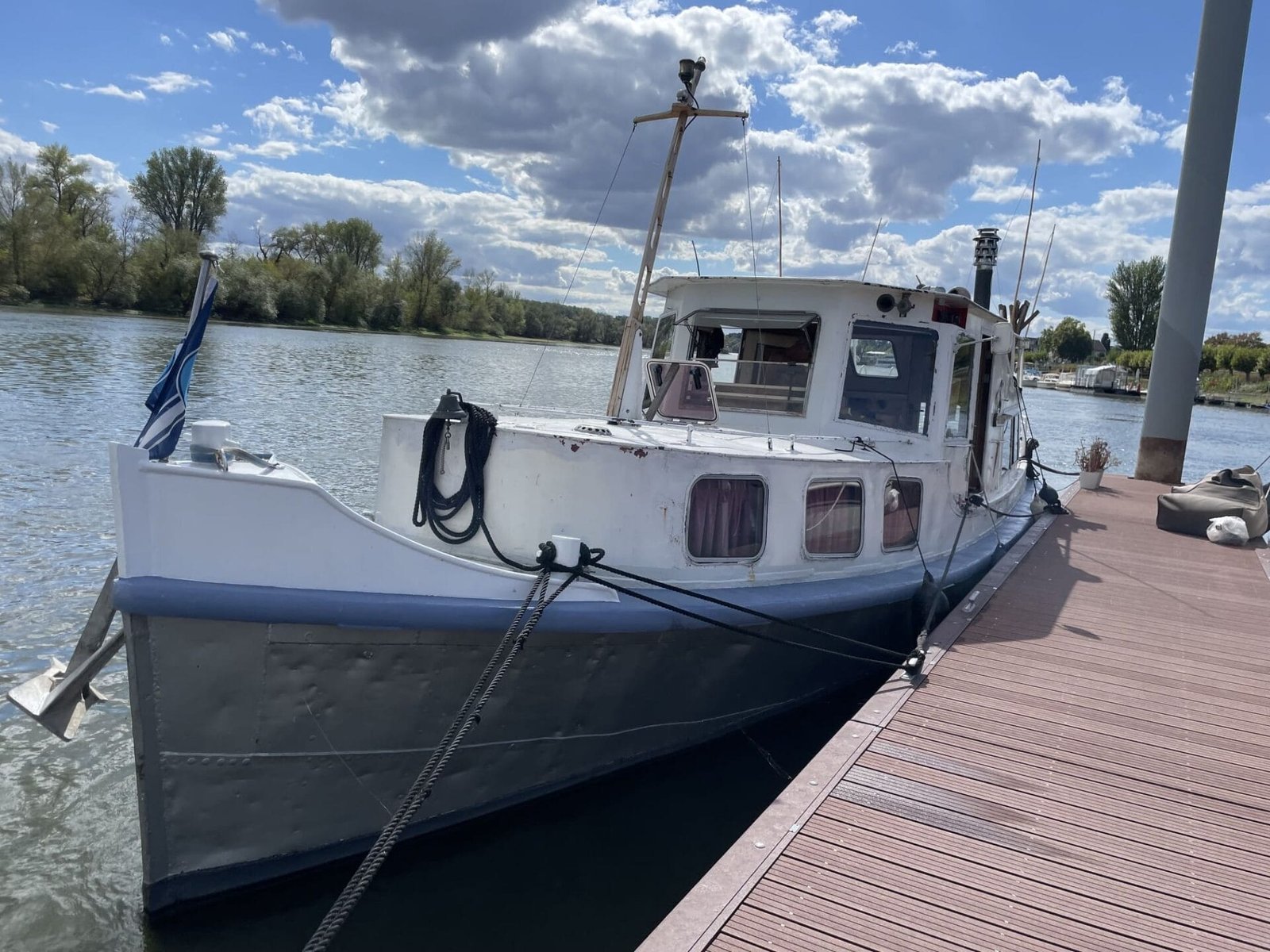
The project culminates in a three-part presentation in Berlin and currently is seeking funding and partners. It runs alongside a related, longer-term inquiry Haas calls What the Water Remembers, an ongoing research project examining water as a carrier of memory, movement, migration and ecological knowledge, threads that clearly connect back to both THE RIVERING and What Does the River Know?.
Conclusion
Across a decade of grants, residencies and collaborations, from a 2017 STEP Travel Grant that took her to Bosnia-Herzegovina to research pyramids, through to the Luxembourg Prize the same year, Haas has built a practice where the working method matters as much as the finished piece. Late Summertime Woman continues its Kerry-to-Berlin trajectory through 2027. THE RIVERING sets sail from the Rhine once funding is in place, bound for Sète and then Berlin. Both projects ask the same underlying question in different water: what a body learns when it stops directing the work and starts listening to what’s already moving around it.
Discover current projects, performance dates, and research archives at www.nadjadances.com.

